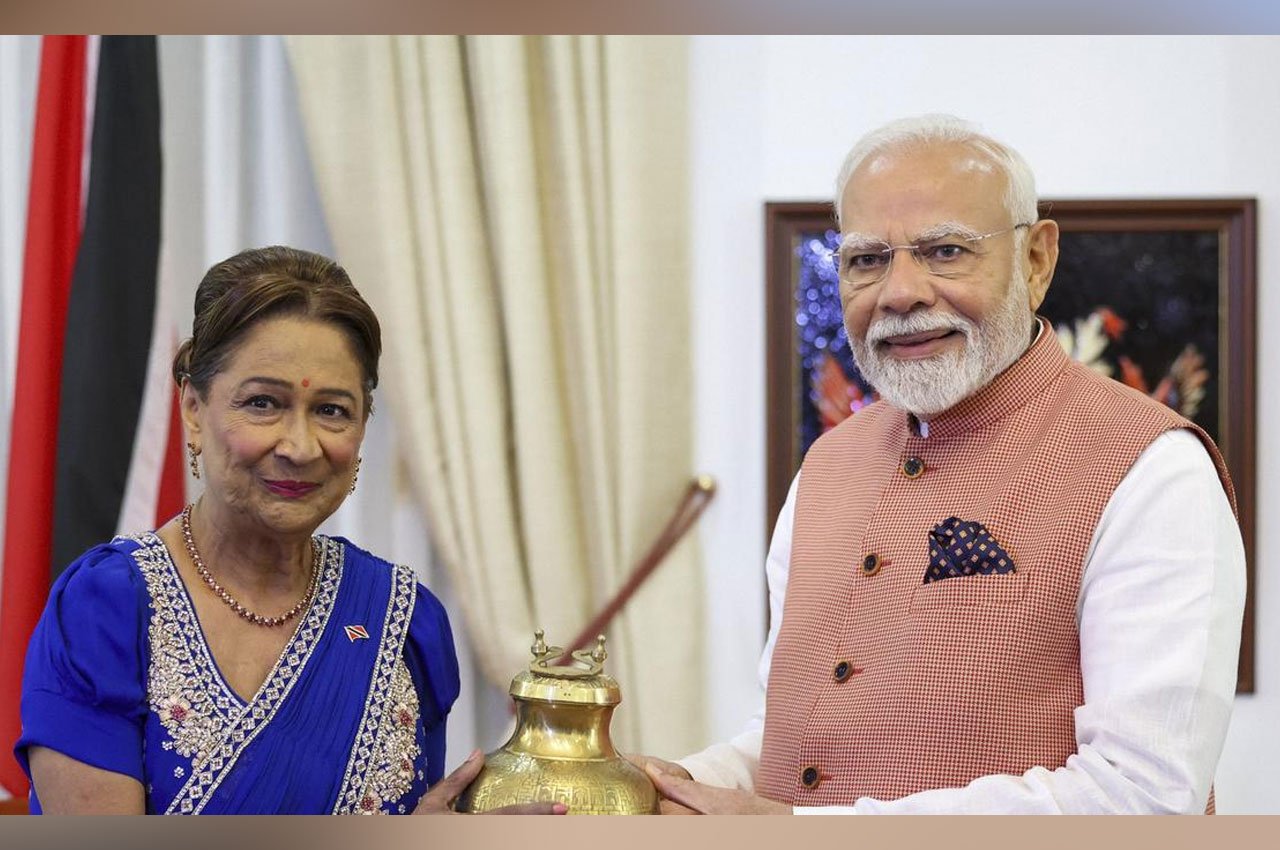
PM Modi Gifts Holy Water to Prime Minister of Trinidad & Tobago. Photo Credit: thehindu
In a significant act of cultural diplomacy, Prime Minister Narendra Modi has gifted holy water from the Mahakumbh, water from the sacred Saryu River in Ayodhya, and a finely crafted replica of the Ram Mandir to Prime Minister of Trinidad and Tobago, Dr. Keith Rowley. The offering was made during a special dinner hosted in honour of the visiting Indian leader, as part of his diplomatic outreach to strengthen ties with the Caribbean nation.
This gesture was not merely symbolic—it was steeped in religious, emotional, and historical relevance, both for India and for the Indo-Caribbean diaspora, which traces its roots back to indentured labourers from India in the 19th century. By presenting these spiritual artefacts, PM Modi underscored India’s commitment to nurturing bonds not just through trade and diplomacy, but through shared heritage and civilisational values.
Cultural Diplomacy on Display
The gifts were personally handed over to the Trinidadian Prime Minister and included three components: water from the Mahakumbh Mela in Prayagraj, considered the largest religious congregation in the world; water from the Saryu River, deeply linked with Lord Ram’s legacy; and a miniature replica of the Ram Mandir, the grand temple recently inaugurated in Ayodhya.
According to The Hindu, speaking during the exchange, PM Modi remarked that these offerings were a symbol of India’s cultural soul and spiritual continuity. “It is my honour to bring to you the holy water from the Saryu and Mahakumbh, along with a model of the Ram Mandir. May it bless the people of Trinidad and Tobago,” he said.
On social media platforms like X (formerly Twitter) and Instagram, Modi also posted a video of the ceremonial exchange, calling it a deeply emotional moment that reflects the timeless bond between Bharat and its global family.
The Significance Behind the Gifts
Each item in Modi’s diplomatic offering carried profound meaning. The Mahakumbh Mela, which takes place every 12 years at Prayagraj, Haridwar, Nashik, and Ujjain, is one of the oldest and most sacred pilgrimages in Hinduism. Water from this event is believed to purify the soul and bestow spiritual liberation.
The Saryu River in Ayodhya holds similar importance. Closely associated with Lord Ram, the river has been a site of devotion and ritual since ancient times. By including water from the Saryu, Modi subtly invoked the Ramayana’s moral and spiritual symbolism, now embodied in the newly constructed Ram Mandir.
The replica of the Ram Mandir—a symbol of faith, unity, and resurgence of civilisational pride—was perhaps the most emotive gesture. It resonates not only with Hindus globally but also with Indian-origin communities across the Caribbean, many of whom continue to celebrate Ram Navami, Diwali, and other Vedic traditions with immense fervour.
Strengthening Diaspora Bonds
Trinidad and Tobago is home to a vibrant Indian diaspora, many of whom are descendants of indentured labourers brought from India between 1845 and 1917. The country has preserved Indian languages, customs, and religious practices to a remarkable extent. By presenting sacred elements from India, PM Modi rekindled ancestral links and spiritual memory within this community.
Dr. Keith Rowley responded warmly to the gifts, calling them “treasures of timeless friendship” and appreciated India’s deep cultural sensibilities. The moment was lauded not just in Trinidad, but by Indian diaspora communities across Guyana, Suriname, Mauritius, and Fiji—nations with similar historical ties.
Soft Power Meets Spiritual Legacy
PM Modi’s move exemplifies India’s increasing use of soft power diplomacy—leveraging civilisational identity to build goodwill. Instead of focusing solely on strategic partnerships or economic deals, India is increasingly projecting its religious, cultural, and spiritual traditions on the world stage.
This approach is part of a larger pattern that includes gifting manuscripts, Yoga outreach, and temple collaborations abroad. Whether it’s through sharing Ayurveda in Latin America or establishing Indian cultural centres in Africa, the aim is clear: to make Bharat’s heritage a living diplomatic asset.
For more spotlight stories click here
Follow us for latest updates: