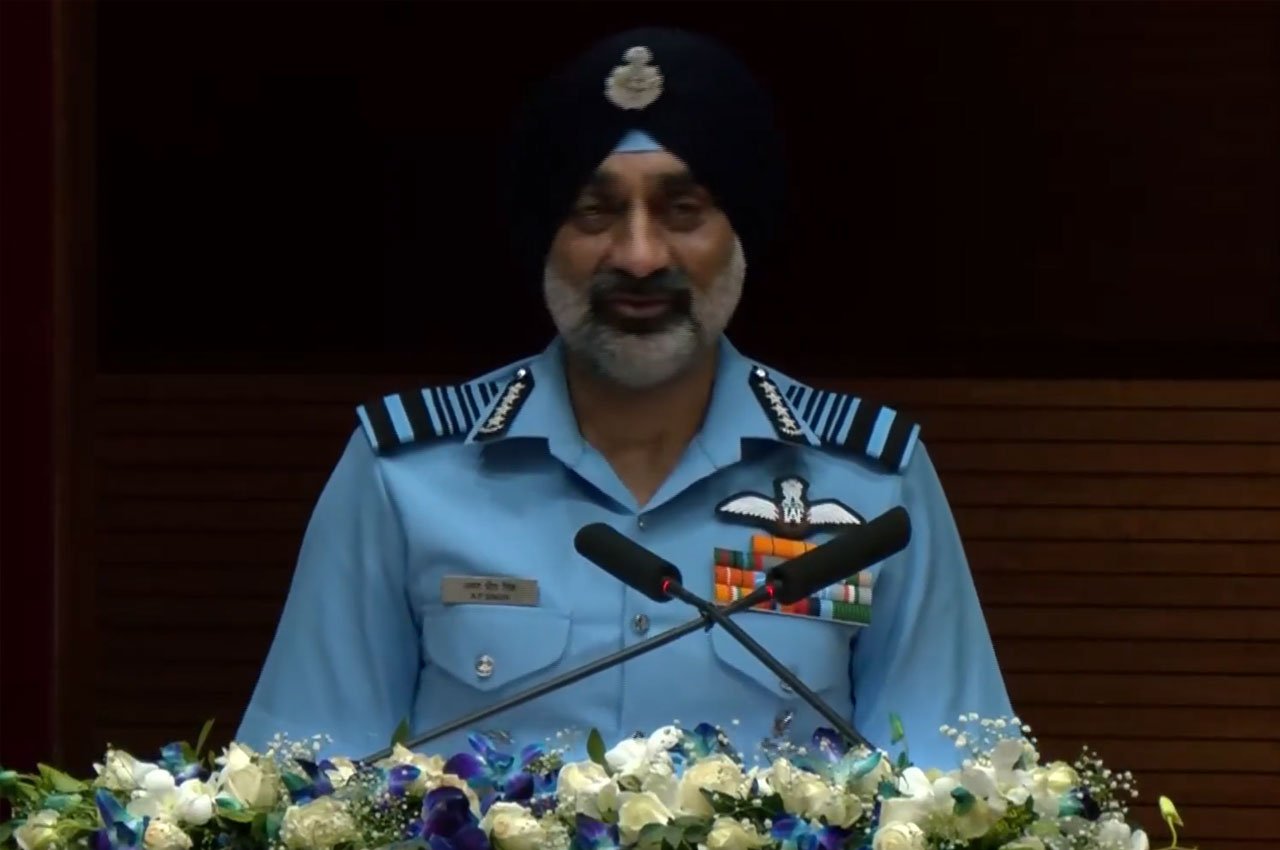
In a rare and bold disclosure, Indian Air Force Chief Air Chief Marshal A. P. Singh has revealed that during May’s Operation Sindoor, India successfully shot down five Pakistani fighter jets and one large surveillance aircraft, reported The Tribune. The operation, executed with the advanced S-400 surface-to-air missile system, included a record-setting long-range strike that destroyed the surveillance plane from 300 km away—a feat Singh described as the “largest ever recorded surface-to-air kill.”
A Game-Changing Moment in Modern Air Warfare
Speaking at the Air Chief Marshal L. M. Katre Memorial Lecture in Bengaluru, Singh highlighted the strategic significance of this operation, underscoring the S-400 system’s advanced detection, tracking, and engagement capabilities. The interception of a high-value surveillance target at such a distance, he said, was not just a demonstration of technological superiority but a clear statement of India’s deterrence capability in the region.
The S-400 Triumf, widely regarded as one of the most advanced air defense systems in the world, proved to be a decisive factor in India’s ability to neutralize multiple airborne threats in a short span of time. Singh emphasized that precision targeting and superior coordination were key to the mission’s success.
Precision Strikes Deep Inside Adversary Territory
During the same engagement, Indian forces reportedly disabled several Pakistani radar systems and hit critical command-and-control centres at Murid and Chaklala. The operation also targeted Jacobabad air base, with a significant portion of an F-16 hangar destroyed—raising the possibility that several aircraft inside may have been damaged or rendered inoperable.
This combination of long-range kills and infrastructure strikes, Singh explained, showcased India’s evolving capacity to conduct deep precision operations while maintaining control of the escalation ladder.
Pakistan Pushes Back
In Islamabad, the Indian claims were swiftly and strongly rejected. Pakistan’s Defence Minister Khawaja Asif called the statements “implausible, ill-timed and politically motivated,” and suggested that such remarks could lead to dangerous miscalculations between two nuclear-armed neighbours. He challenged India to allow independent verification of the claimed aircraft losses.
The Pakistani Air Force has so far released no official data to support or counter the Indian account, maintaining that its defensive readiness remains intact.
Strategic and Diplomatic Ripples
Analysts view the disclosure as both a military and diplomatic signal. On the operational side, the announcement reinforces the view that the S-400 has become a game-changer for India’s air defense, giving it unprecedented reach and accuracy. On the geopolitical side, the timing—just ahead of a scheduled visit by Russian President Vladimir Putin—adds a layer of diplomatic nuance, especially given Russia’s role as the S-400’s supplier.
The episode also plays into a broader narrative of India’s increasing technological self-reliance in defense, as it integrates imported systems like the S-400 into a growing indigenous defense ecosystem. Singh credited the operation’s success to swift decision-making, strong political backing, and operational autonomy granted to field commanders—factors he said were essential for modern high-tempo warfare.
A New Chapter in Air Defense History
Whether Pakistan acknowledges the losses or not, the claim of a 300 km surface-to-air strike will likely be remembered as a milestone in air combat history. Long-range kills of this scale are rare, even among the world’s most advanced militaries, and they highlight how modern warfare increasingly depends on early detection and decisive engagement rather than prolonged dogfights.
For India, the operation is being framed not only as a tactical success but as a proof point for its growing ability to control the
Operation Sindoor may have lasted only days, but its strategic reverberations will likely be felt for years. The Indian Air Force’s claim of six aerial victories, including a record-breaking long-range strike, underscores a shifting balance in South Asian air power. In an era where technology, speed, and precision dictate the outcome of conflicts, India’s message is clear: it can see further, strike faster, and do so with lethal accuracy.
For more stories click here
Follow us for latest updates: