Kolkata Gangrape Case
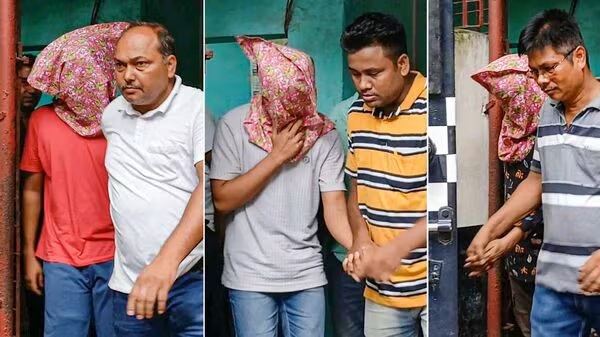
In this collage of three images, the accused in the alleged gang-rape of a first-year law student from a South Kolkata college are seen being produced in a city court. Photo Credit: PTI
In a chilling escalation in Kolkata, horrifying details emerge in the gangrape case of a 24-year-old law student, who was reportedly beaten with a hockey stick, had the assault filmed, and was subsequently blackmailed by her attackers—shocking elements that have triggered public outrage and demands for swift justice. The shocking details have been reported by the Live Mint, the victim—a first-year student at South Calcutta Law College—was allegedly lured to the campus union room on June 25 under the guise of securing a girls’ wing leadership role. Instead, she was confined in an adjacent guard room by three men: Manojit Mishra, 31, a former student leader and current contract staffer; and two current students, Zaib Ahmed (19) and Pramit Mukherjee (20). According to her complaint, Mishra had proposed marriage, and when she declined—citing an existing boyfriend—he grew violent. She was beaten with a hockey stick, sexually assaulted, and the entire ordeal was filmed on their phones.
Medical examinations confirmed the brutality: forceful penetration, bite marks, and nail scratches, reinforcing the survivor’s account of resistance and violence. The gang reportedly threatened to release the video footage online if she attempted to report the crime. During the attack, one of the perpetrators attempted to hit her again, even as she begged for help, recounted a panic attack, and tried to escape. She later managed to break free.
Police registered an FIR on June 26, swiftly impounding the accused’s mobile phones for forensic analysis. Within hours, all three suspects were arrested and remanded in custody till July 1. The police also secured the crime scene and collected CCTV footage and eyewitness testimonies. Investigators described the assault location as the ground-floor guardroom—an area the college authorities are now scrutinizing for lapses in safety and protocol enforcement.
The case has brought campus safety into sharp focus. That the attack took place within college premises—in a supposedly secure space—has raised serious questions about institutional responsibility. A guard reportedly heard her pleas but was overpowered or intimidated by the accused. The survivor said they locked him out. This scenario has intensified public criticism over how allegations were allowed to reach such a devastating point despite nearby authority figures.
Political fallout has been immediate. Manojit Mishra’s past involvement with the Trinamool Congress student wing (TMCP) has prompted accusations and heated debate. The BJP has seized on the incident as evidence of deteriorating law-and-order under the current state government. In response, the TMC has asserted that allegations are being sensationalized and declared their willingness to cooperate fully with the investigation.
The police received a prompt suo motu notice from the National Commission for Women (NCW), which demanded a detailed investigation, psychological support, and financial aid for the survivor. Under mounting pressure, educational institutions and policymakers are now evaluating their safety measures, including access control, surveillance infrastructure, and response mechanisms for students in distress.
Legal experts call for a more comprehensive policy on campus safety. They urge educational institutions to implement robust “no tolerance” protocols against sexual violence, including mandatory reporting, survivor support services, and regular training for faculty and staff. Many argue that political affiliations of campus leaders should not shield them from accountability.
Civil society activists, meanwhile, are demanding systemic reform. They point out that many college campuses across the country remain vulnerable to violence by students or staff with strong political backing. The resurfacing of this horrific case—shortly after the brutal R G Kar Medical College incident—reinforces the need for urgent interventions in campus governance, policing, and student safety.
As outrage mounts, Kolkata Police have promised transparent and professional conduct, urging the public to avoid spreading unverified claims. Authorities are racing against time to obtain forensic evidence, including phone and CCTV data, body-camera recordings, and medical examination reports, to build an airtight case.
For the survivor, the aftermath is emotional and daunting. She is receiving medical and psychological care, and relatives are ensuring her privacy and safety. The NCW is monitoring the case closely, emphasizing that justice must be swift and comprehensive—not limited to prosecution, but also including compensation and educational support.
Without timely resolution, critics warn, this case could feed a broader narrative of institutional failure and political impunity—further eroding public confidence in campus safety. For now, the shockwaves of this horrifying gangrape case are sending ripples through Kolkata’s academic community, prompting urgent conversations about safeguarding students and rattling the political foundations linked to campus bodies.
For more top stories click here
Follow us for latest updates: