Debris from the Air India aircraft lay scattered across the premises of a medical hostel and its canteen, where the plane crashed shortly after take-off from Ahmedabad on June 12.
What really caused the Air India crash? While the preliminary probe into the devastating Ahmedabad tragedy points to pilot error, experts are not convinced. As investigators hint at a fuel switch mishap, aviation specialists are raising red flags — dismissing the pilot error theory and calling the investigation itself into question. With 241 lives lost and only one survivor, many critical questions remain unanswered, deepening the mystery around one of India’s worst air disasters in recent memory.
Early Findings Point to Fuel Cutoff, Not Human Error
India’s Aircraft Accident Investigation Bureau (AAIB) stated in its interim report that both engine fuel control switches were found in the “cutoff” position shortly after takeoff. Cockpit voice recordings revealed confusion between the pilots — one allegedly denying activating the cutoff. This has raised eyebrows in the aviation community.
The aircraft, a Boeing 787 Dreamliner, was en route from Ahmedabad to London Gatwick on June 12 when it crashed into a medical college building minutes after takeoff, killing 241 of the 242 people onboard.
Expert View: “Highly Unlikely” Pilots Flipped Both Switches
As reported by India Today, senior aviation experts argue that the switches in question are designed with multiple safeguards to prevent accidental activation. “Both switches cutting off simultaneously — unless done deliberately — is highly unusual,” said a retired DGCA official. Experts suggest possible mechanical malfunction or a software-triggered failure.
Survivor Account Suggests Trouble Before Takeoff
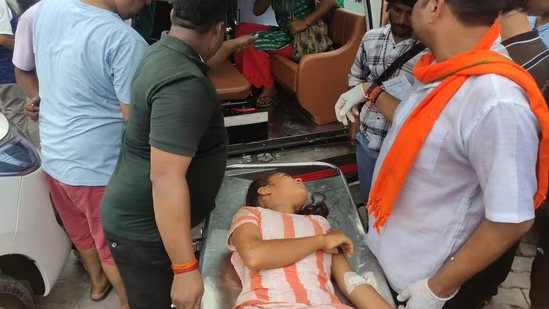
The sole survivor, 16-year-old Alisha Khan, recalled hearing “a loud mechanical crack” and feeling a strange vibration before the aircraft lifted. Her account has added weight to the argument that technical malfunction, rather than human error, could be at play.
Maintenance Records Under Review
The aircraft had passed a C-check just 11 days prior, with no apparent fuel or throttle-related complaints. However, it had undergone multiple throttle module replacements in the last five years. Investigators are now closely reviewing its maintenance and component history for red flags.
Airline and Regulator Under Pressure
Air India Express has stated that the aircraft had no reported issues prior to the flight and has promised full cooperation. However, both the airline and the DGCA are facing growing calls for transparency and accountability.
Some lawmakers and victims’ families have demanded an independent international probe into the crash, citing concerns over regulatory oversight and possible manufacturer accountability.
What’s Next?
With black box data being analyzed by experts from the US, UK, and India, a final report is expected in the coming months. Until then, families, aviation experts, and the flying public are left with a haunting question: What truly caused the Air India crash?
Photo Credit: PTI