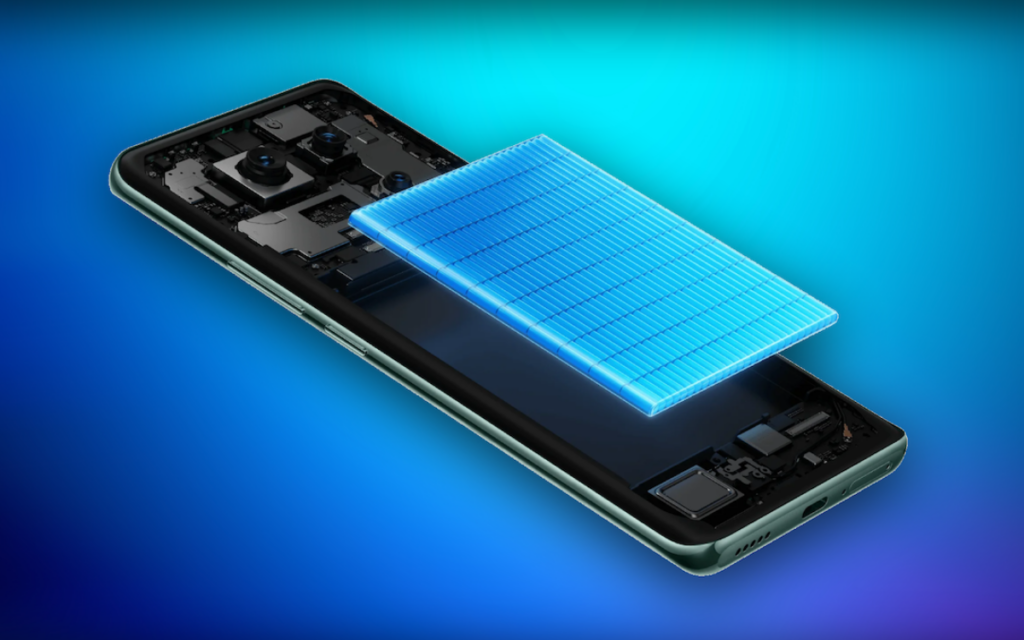
Battery innovation seldom takes center stage in the world of consumer tech, yet it may soon redefine our daily experience with smartphones—and silicon‑carbon batteries are leading the charge. A new generation of lithium‑ion cells is emerging, offering compactness, speed, longevity, and impressive performance gains—all while eliminating much of the compromise between slim design and battery life.
The Limits of Traditional Lithium‑Ion
For decades, lithium‑ion batteries have relied on graphite anodes—the widely used, stable material with a maximum capacity of approximately 372 mAh/g. Improvements in this technology have been incremental at best, hovering around just 3–5% per product cycle, which is increasingly inadequate as users demand longer runtimes and thinner devices.
Introducing Silicon‑Carbon Composite
Silicon offers transformative potential. Pure silicon can theoretically store nearly 10 times more lithium than graphite, but it comes at a steep cost: it expands by 300–400% during charging, quickly degrading the cell. The breakthrough comes in the form of silicon‑carbon (Si/C) composites, which mix small amounts (typically 5–15%) of nano‑silicon into a conductive carbon scaffold. This structure stabilizes expansion, balances capacity, and achieves the sweet spot of a 10–20% boost in energy density without compromising reliability.
How It Works in Practice
A silicon‑carbon battery functions much like a traditional Li‑ion cell: lithium ions migrate between cathode and anode during charge/discharge. But the improved anode structure stores more ions in the same volume—translating to either higher capacity or a thinner cell footprint. For example, a 5,000 mAh battery using Si/C tech can deliver closer to 5,500–6,000 mAh without growing in size.
Additional real-world benefits include faster charge acceptance, better low-temperature performance, and more stable voltage at the end of the discharge cycle. Honor’s early tests showed over 240% more remaining capacity at 3.5 V compared to traditional graphite cells.
Adoption Timeline and Brand Uptake
Honor pioneered the application in smartphones back in 2023 with its Magic 5 series. By 2025, silicon‑carbon batteries were widely adopted across flagship smartphones from Xiaomi, OnePlus, Vivo, Oppo, and Huawei’s budget lines. Devices like the Honor Magic V2 and OnePlus 13 used Si/C technology to enable ultra-thin foldables with 6,000 mAh+ batteries.
Engineering Challenges and Trade‑Offs
The silicon expansion problem is finite if managed, but even a 10–20% silicon mix can induce measurable swelling. Carbon scaffolding helps contain this, but Si/C cells may still degrade slightly faster than traditional graphite versions. This has made cautious companies like Apple and Samsung slow adopters—they expect battery capacity retention of 80% or more after extensive charging cycles.
Broader Industry Context
While silicon‑carbon batteries build on existing Li‑ion infrastructure, solid‑state batteries promise radical future improvements—albeit at production cost and scaling hurdles that remain unresolved. For now, Si/C represents the most practical upgrade path: a real-world efficiency boost within established manufacturing norms.
At industrial scale, companies like Sila Nanotechnologies (with its Titan Silicon composite) and Group14 Technologies (with SCC55 material) are actively developing silicon‑carbon anode materials. Panasonic has partnered with Sila to integrate this in EV batteries capable of up to 10‑minute recharges and 20 percent higher mileage, and Group14 is producing SCC55 to support Porsche and electronics clients.
In India, a key milestone arrived recently as Himadri Speciality Chemical tied up with Australian startup Sicona to establish the country’s first silicon‑carbon anode plant, targeting a 20% rise in energy density and faster EV charging performance for the domestic market.
What This Means for Users
Expect devices packing more battery life in lighter, slimmer form factors. Flagships with 6,000 mAh batteries now fit comfortably into sub‑8 mm foldable frames, and powerful gaming phones with massive capacity remain surprisingly portable. At the same time, charge times shrink and performance degrades less noticeably near end‑of‑day.
Final Word
Silicon‑carbon batteries are rapidly rewriting what’s possible in consumer electronics: more energy, faster charging, thinner designs, and reduced battery anxiety—all without upending existing production. While still not perfect—some degradation concerns persist—the Si/C hybrid approach achieves a smart balance of performance and reliability. And for smartphones and EVs alike, it’s a game‑changer.
Photo Credit: GizmoChina