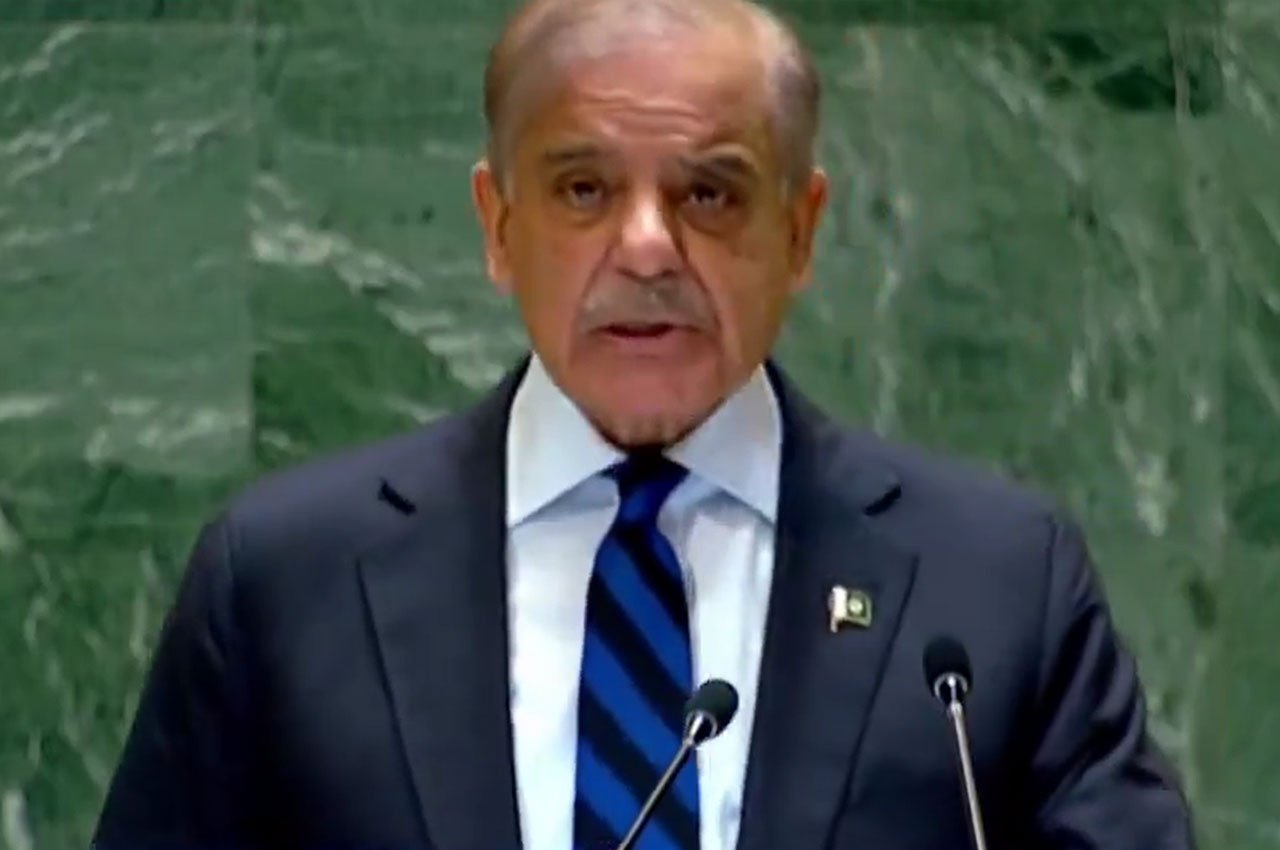
Pakistani Prime Minister Shehbaz Sharif on Tuesday issued a fierce warning to India over the Indus Waters Treaty, declaring that “not even a single drop” of Pakistan’s water will be allowed to be taken by India. According to Hindustan Times, his statement directly echoes the earlier hardline threat by Pakistan Army Chief General Asim Munir, who warned of a potential military response, signaling the growing seriousness of the water dispute between the two nuclear-armed rivals.
Sharif spoke at a public event in Islamabad on August 13, accusing India of weaponising water resources and violating the treaty signed in 1960, which has historically governed the sharing of rivers flowing between India and Pakistan. He made it clear that any attempt by India to block or divert Pakistan’s rightful share would provoke a “decisive response,” amplifying the message delivered by General Munir just days before, who had bluntly declared water to be Pakistan’s “red line” and hinted that any interference could lead to a military attack.
The escalating rhetoric follows India’s controversial suspension of the Indus Waters Treaty on April 23, 2025, citing national security concerns after a deadly terrorist attack in Pahalgam. Under the treaty’s terms, India controls the eastern rivers — Ravi, Beas, and Sutlej — while Pakistan has rights over the western rivers — Indus, Jhelum, and Chenab. India’s suspension of the treaty and accompanying punitive diplomatic actions have sharply increased tensions in the region.
Alongside Sharif’s statement, Pakistan’s political and military leadership have rallied in unison. Former Foreign Minister Bilawal Bhutto Zardari condemned India’s actions as an “attack on civilisation,” while Deputy Prime Minister Ishaq Dar described the treaty as “critical” to Pakistan and warned that any disruption to water flow would amount to an act of war.
On the international front, Pakistan welcomed a ruling by the Permanent Court of Arbitration related to design norms of Indian hydropower projects on the western rivers, viewing it as a legal vindication. India, however, has rejected any third-party intervention, insisting that the dispute must be settled bilaterally.
The Indus Waters Treaty has long been seen as a rare example of cooperation between India and Pakistan, surviving multiple wars and hostilities since 1960. However, its suspension and the intensified threats from Pakistan’s military and political leaders indicate a dangerous new chapter in bilateral relations. Reports of India’s unilateral control over water flows from key dams like Baglihar and Uri have further aggravated tensions downstream in Pakistan.
With the Pakistan Army chief’s veiled threat of military action and Prime Minister Shehbaz Sharif’s uncompromising warnings, the water dispute has escalated beyond a diplomatic or legal disagreement. It now stands as a serious flashpoint with potential implications for peace and stability in South Asia.
Photo Source: X
For more stories click here
Follow us for latest updates: