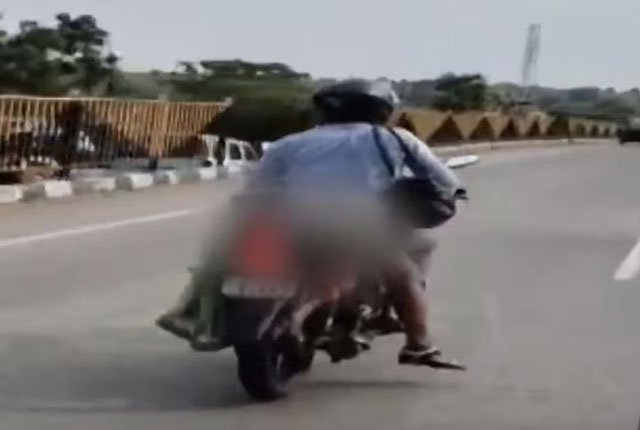
On a rainswept stretch near Deolapar on the Nagpur–Madhya Pradesh highway, Amit Yadav faced a moment no one should have to endure. His wife, Gyarshi, was struck by a speeding truck, sustaining critical injuries. With no assistance forthcoming, no hand to help, no voice to console, he placed her on his bike and began an 80-kilometer journey toward home. She eventually died from her injuries during this journey.
It is an image that should prompt reflection among both citizens and authorities: a husband riding through rain, his wife’s body secured to the back of his motorcycle, because no support system came to his aid. This is not just a personal loss, it is a commentary on the gaps in our social and institutional response.
A Mirror to Our Moral Neglect
The scene on that highway underscores how fragile our support systems really are. We often speak with pride about India’s expanding infrastructure, its growing network of highways, and its aspirations for global standing. Yet, when an ordinary citizen needed help in an hour of distress, neither the system nor the public stepped forward.
There was no ambulance at the spot, no police patrol stopping to assist, no passerby willing to halt and offer help. The absence of timely intervention is not an isolated failure, it is indicative of a larger, systemic shortcoming.
Equally troubling was the reaction of those who passed by. Vehicles drove past, some slowing momentarily before moving on. In that rain-soaked night, empathy seemed to be in short supply. If our instinct in such situations is to move away rather than step in, then we must accept that we are facing a moral crisis.
The State’s Responsibility in Preventable Agony
In countries with well-functioning emergency response mechanisms, an accident like this triggers immediate action: emergency vehicles are dispatched, alerts are raised, and trained personnel arrive within minutes. In India, however, the picture is uneven. Many areas, especially highways running through semi-urban or rural zones, still lack such readiness.
National highways, though vital for the movement of goods and people, can often become places where victims are left without timely aid. If assistance cannot be guaranteed on one of the busiest transport routes, the situation in remote areas is likely worse. Infrastructure should not only be about road quality and connectivity, it should also include systems that protect and assist road users when things go wrong.
A Society Numbed to Suffering
Beyond the shortcomings of institutions lies a deeper issue, the waning of human empathy. In this case, weather conditions, fear of involvement, or uncertainty about procedures may have influenced passersby. But the fact remains that no one stopped to offer meaningful help.
The Good Samaritan law exists to encourage people to assist accident victims without fear of legal complications. Yet the lack of awareness and lingering hesitation prevent it from achieving its full purpose. When hesitation replaces compassion, situations like this one become inevitable.
From Concern to Concrete Action
Stories of people carrying accident victims themselves, arranging their own transport, or waiting for hours for help are not rare. This underlines the urgent need for a strong, reliable, and accountable emergency response system. Highway patrols, well-publicised helplines, and rapid deployment teams must be standard practice, not rare exceptions.
At the same time, a shift in public mindset is essential. Helping an accident victim should not be perceived as risky or exceptional, it should be a natural and immediate response. Public awareness campaigns that explain protections under the Good Samaritan law could play a role in bridging this gap.
Beyond the Incident: A Call for Change
Amit Yadav’s long ride back was not undertaken as a symbol or statement, it was the only option left to him. It speaks to the absence of timely intervention and the lack of a support network for citizens in distress.
If such incidents fade from memory without leading to reforms, then they are bound to recur. A nation’s progress is measured not only by its economic milestones, but also by how it responds to those in urgent need of help.
The next time we encounter an accident or a stranded person, let this serve as a reminder that stepping forward is not merely a moral choice, it is a civic responsibility. A society that does not extend help in moments of crisis is one that risks losing its sense of community altogether.
Photo Credit: Videograb (Social Media)