Nepal is witnessing a political earthquake. What began as a youth-led protest against a government-imposed social media ban has escalated into a nationwide uprising, culminating in the resignation of Prime Minister KP Sharma Oli. The tragic loss of at least 20 lives and the storming of government buildings signal a profound crisis. But beneath the surface of this unrest lies a complex interplay of domestic discontent and international intrigue.
The Spark: Social Media Ban and Youth Disillusionment
The immediate catalyst for the protests was the government’s decision to ban 26 social media platforms on September 5, 2025. This move was perceived as an attempt to stifle dissent and control the narrative, especially among the youth. The term “nepo kids” gained traction, reflecting widespread frustration with a political elite perceived as corrupt and disconnected from the aspirations of the younger generation.
However, the ban was merely the tipping point. The underlying grievances – rampant corruption, nepotism, and a lack of accountability had been simmering for years. The youth, empowered by digital platforms, found their voices and took to the streets, demanding systemic change.
The Unfolding Crisis: From Protest to Insurrection
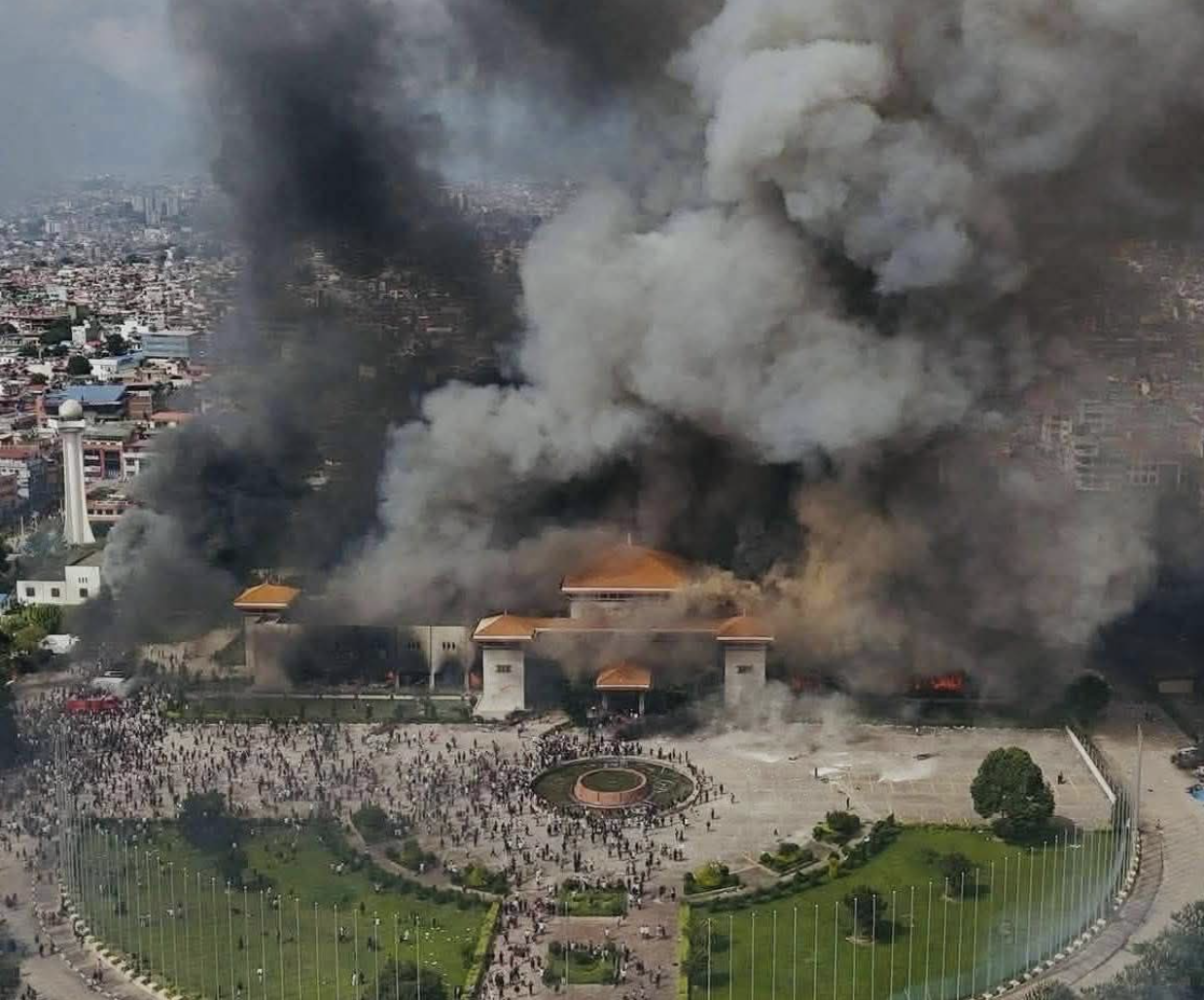
The protests rapidly escalated from peaceful demonstrations to violent confrontations. Security forces clashed with protesters, resulting in numerous casualties. The situation intensified when demonstrators stormed the parliament building and set it ablaze, symbolizing their rejection of the current regime.
In a desperate bid to quell the unrest, Prime Minister Oli resigned, stating his decision was to facilitate a solution to the crisis. Despite lifting the social media ban, the protests continued, with demonstrators now calling for broader political reforms and the dismantling of an entrenched political system.
The Geopolitical Dimension: Nepal’s Strategic Crossroads
While the protests are driven by domestic issues, their timing raises questions about external influences. Prime Minister Oli had recently returned from a visit to China and was scheduled to travel to India later in September. Nepal’s geopolitical position, nestled between two Asian giants, makes it a strategic pawn in the broader China-India rivalry.
The unrest in Nepal mirrors the political upheaval in Bangladesh in mid-2024, where student-led protests toppled the government of Prime Minister Sheikh Hasina. Both instances highlight the vulnerability of governments in the region to youth-led movements and the potential for external actors to exploit domestic instability for strategic gains.
The Path Forward: Navigating Internal Reform and External Pressures
Nepal stands at a crossroads. The Gen Z uprising is a clarion call for reform, demanding transparency, accountability, and an end to corruption. The youth have demonstrated their capacity to mobilize and challenge the status quo, signaling a shift in the political landscape.
However, the path to meaningful change is fraught with challenges. The entrenched political elite is unlikely to relinquish power without a struggle. Moreover, Nepal must navigate the complex web of regional geopolitics, balancing relations with both China and India while safeguarding its sovereignty.
The international community, particularly neighboring countries like India, must support Nepal’s democratic aspirations without interfering in its internal affairs. Constructive engagement, rather than coercion, will be crucial in helping Nepal emerge from this crisis stronger and more united.
Conclusion: A Nation in Flux
Nepal’s Gen Z uprising is more than a protest; it is a movement for change, a demand for a future free from corruption and political manipulation. As the nation grapples with this turmoil, it must seize the opportunity to rebuild its political institutions, ensuring they are inclusive, transparent, and accountable to the people.
The coming days will be critical in determining whether Nepal can transform this crisis into a catalyst for positive change or whether it will succumb to the forces of division and external interference. The world watches, hoping for a peaceful resolution that honors the aspirations of Nepal’s youth and secures a democratic future for the nation.
For more stories click here
Follow us for latest updates: