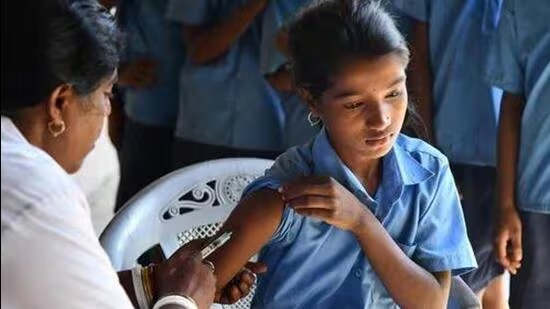
In a major leap toward universal child healthcare, India has managed to reduce the number of zero-dose children—those who have not received even a single routine vaccination—by a remarkable 43% in 2024. According to the latest immunisation estimates released jointly by the World Health Organization (WHO) and UNICEF, the number of such unvaccinated children in India dropped from 1.6 million in 2023 to just 0.9 million in 2024, reported Hindustan Times.
This achievement marks a significant turnaround in the country’s post-pandemic health response and positions India among the global leaders in expanding vaccine access for children. With this development, India has not only regained but exceeded pre-COVID levels of immunisation coverage, reflecting the sustained efforts of healthcare workers, government initiatives, and community outreach programmes.
Zero-dose children are defined as those who miss all scheduled routine vaccinations in their first year of life. These include the crucial first doses of vaccines for diphtheria, tetanus, and pertussis (DTP), among others. The presence of zero-dose children is an important indicator of immunisation coverage and the inclusiveness of a country’s public health outreach. A high number of such children often points to systemic gaps in healthcare access, social equity, and awareness. Therefore, India’s success in bringing this number down by nearly half in just one year has been widely lauded by international health agencies.
Globally, an estimated 14.3 million children remained completely unvaccinated in 2024, with India accounting for around 6% of that figure. While there is still ground to cover, the reduction in India’s share of zero-dose children represents a crucial shift. The South Asia region as a whole witnessed a 27% decrease in zero-dose children, from 2.5 million to 1.8 million, largely driven by India’s progress. Notably, India accounted for over 171,000 of the additional infants who received at least one dose of vaccine during the year.
The report highlights that while first-dose coverage—specifically the DTP1 vaccine—rose globally to 89%, complete immunisation coverage (DTP3) stood at 85%, just below the pre-pandemic threshold of 86%. In South Asia, DTP1 coverage improved from 93% to 95%, while DTP3 climbed from 92% to 94%, surpassing even the 2019 levels. This rebound in immunisation reflects a successful regional effort to recover from the disruptions caused by the COVID-19 pandemic.
India’s improvement is not coincidental but the result of strategic planning and ground-level implementation under the government’s Universal Immunization Programme (UIP), one of the largest public health programmes in the world. Initiatives like Mission Indradhanush and its intensified version (IMI) played a vital role in targeting children and pregnant women who had missed routine vaccines. These efforts were further bolstered by door-to-door campaigns, targeted outreach in remote areas, and digital tracking of immunisation records.
The involvement of Accredited Social Health Activists (ASHAs), Anganwadi workers, and Auxiliary Nurse Midwives (ANMs) has been central to this success story. In many districts, especially in tribal belts and urban slums, health workers used micro-planning, community mapping, and mobile vaccination teams to reach children in difficult terrains and socially marginalised groups. Technology, too, played a supporting role, with digital platforms used for monitoring vaccine delivery and tracking beneficiaries in real-time.
As per official government figures, the percentage of zero-dose children dropped from 0.11% of the total child population in 2023 to 0.06% in 2024. This reduction translates into thousands of children now protected from deadly but preventable diseases, thereby strengthening herd immunity and reducing healthcare burdens in the long term.
However, despite the gains, WHO and UNICEF have flagged concerns that lingering challenges remain. These include vaccine misinformation, global funding gaps, and the fragility of healthcare systems in some areas. Countries like India must now focus on ensuring that these newly vaccinated children receive full-dose coverage and that follow-up campaigns continue to target the last mile. Additionally, conflict zones, migratory populations, and under-resourced rural belts remain vulnerable to immunisation gaps if efforts slow down.
India’s 2024 performance demonstrates what is possible when policy, public health systems, and community mobilisation work in harmony. From battling vaccine hesitancy to overcoming logistical nightmares in remote corners, the country has turned its immunisation programme into a model of resilience and innovation.
The task ahead is to maintain this momentum, plug remaining gaps, and ensure that not a single child slips through the cracks of the healthcare net. If India can continue on this trajectory, it will not only safeguard its own future generations but also play a pivotal role in achieving global immunisation goals under the Immunization Agenda 2030.
Photo Credit: HT