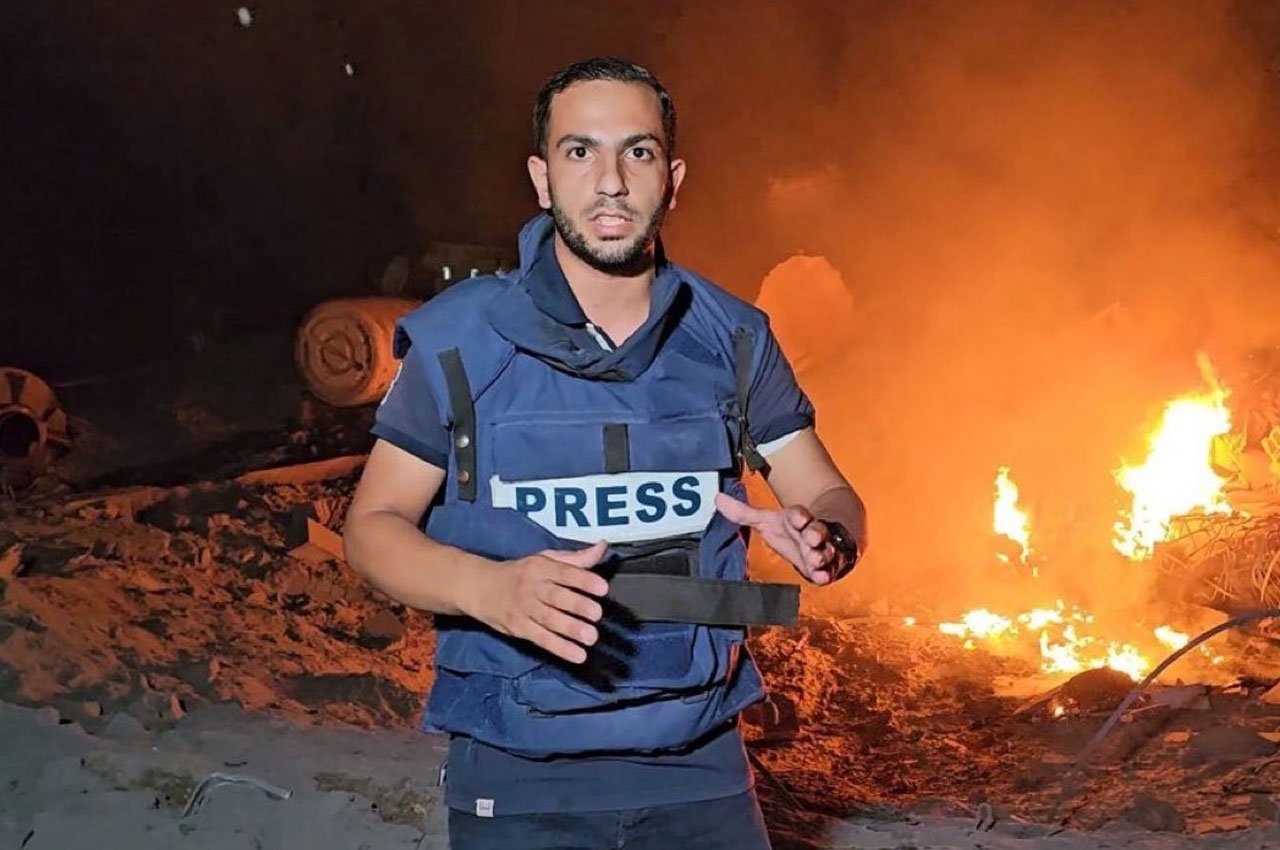
An Israeli airstrike on a media tent located outside the gates of Al-Shifa Hospital in Gaza City has killed five Al Jazeera journalists, including prominent correspondent Anas Al-Sharif. According to The New Indian Express, the other victims were identified as Mohammed Qreiqeh, Ibrahim Zaher, Mohammed Noufal, and Moamen Aliwa.
According to the Israeli Defense Forces (IDF), the strike targeted what they described as a Hamas operative. They claimed that Al-Sharif was a senior figure within the militant group, but no independent evidence has been presented to substantiate this claim. Palestinian authorities and Al Jazeera have strongly rejected the allegation, calling it an attempt to justify the killing of journalists.
Outrage and Condemnation
The strike has sparked outrage across the world. Al Jazeera condemned the attack as a “targeted assassination” and a direct assault on press freedom. The Palestinian Journalists’ Syndicate described it as a “bloody crime” that reflects a dangerous precedent of targeting media workers.
Rights organizations, including the Committee to Protect Journalists (CPJ), expressed deep concern over what they describe as a disturbing pattern of labeling journalists as militants in order to legitimize their killing. CPJ noted that this is not the first time such claims have been made without credible proof, and warned that such actions erode the safety and independence of journalists in conflict zones.
Reporters Without Borders also weighed in, calling for an independent investigation into the airstrike and emphasizing that journalists must be protected under international humanitarian law. The organization pointed to repeated calls from the United Nations for Israel to safeguard media workers during military operations.
Anas Al-Sharif: A Voice from the Frontlines
Anas Al-Sharif, 28, was one of Gaza’s most recognizable journalists. Known for his courageous frontline reporting, he had covered some of the most dangerous moments of the ongoing conflict. Colleagues describe him as a determined and fearless professional who remained committed to telling the stories of ordinary Gazans living under siege.
In recent months, human rights organizations had raised alarms about threats to Al-Sharif’s safety, citing online smear campaigns and repeated public accusations from Israeli officials linking him to Hamas. Supporters argue that these accusations were part of an effort to discredit his work and justify possible action against him.
Shortly before his death, Al-Sharif posted a video report from Gaza, detailing the impact of airstrikes on residential areas. In a poignant farewell message that surfaced after the attack, he reportedly said, “Know that Israel has succeeded in killing me, but it will never silence the truth.”
One of the Deadliest Days for Journalists in Gaza
The killing of five journalists in a single incident marks one of the deadliest days for the press since the Gaza conflict escalated in October 2023. According to press freedom watchdogs, more than 180 journalists have been killed in Gaza since then, making it the highest death toll for media workers ever recorded in a single conflict.
International observers note that the high casualty rate among journalists in Gaza is unprecedented and has raised serious questions about the targeting of media facilities, press vehicles, and reporters despite their clear identification.
Calls for Accountability
Global condemnation has followed swiftly. The United Nations Special Rapporteur on the promotion and protection of the right to freedom of opinion and expression called the attack “unacceptable” and demanded a full, transparent investigation. Several international media organizations have urged the International Criminal Court to examine whether the incident constitutes a war crime.
Meanwhile, Israel maintains that it does not intentionally target journalists, and that any such casualties are the result of legitimate military operations against Hamas and other armed groups. Critics, however, point to a growing body of evidence suggesting systematic targeting of media workers in Gaza, with repeated instances of strikes on clearly marked press locations.
As the conflict continues to intensify, the deaths of Anas Al-Sharif and his colleagues serve as a stark reminder of the dangers faced by journalists who risk their lives to report from war zones. The incident has reignited urgent debates about press freedom, accountability, and the rules of engagement in modern warfare.
The loss of these five journalists not only robs their families and colleagues of loved ones but also silences critical voices bringing global attention to the realities on the ground in Gaza. For many in the media community, their deaths underscore the growing peril of reporting in conflict areas and the pressing need for stronger protections for journalists worldwide.
Photo Source: X
For more stories click here
Follow us for latest updates: