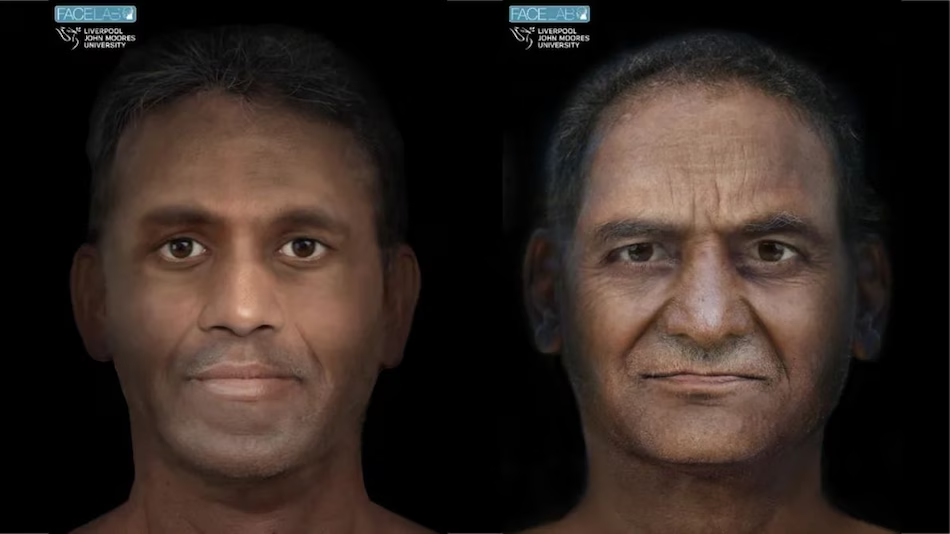
A team of researchers has digitally reconstructed the faces of two men who lived around 2,500 years ago, using skulls discovered in Kondagai, Tamil Nadu. The work reveals not only strikingly lifelike human features but also offers deeper insight into the lives of people in the region during the Iron Age.
The Discovery and The Reconstruction
According to Gadgets 360, two skulls, dated to approximately 580 B.C., were excavated in Kondagai, a site linked to the ancient urban civilisation of Keeladi. Scientists estimate both men were between 50 and 60 years old at the time of death. Using CT scans, the researchers converted the remains into precise 3D models. From those models, muscles, fat, skin and other facial features were digitally overlaid, drawing on reference datasets from modern South Asian populations for guidance.
The reconstructed images show deep-set eyes, defined facial contours, and other realistic features. The team additionally applied typical skin tones, hair and eye colours that are common in the region today, though scientists caution that genetic evidence in the future may refine some of those attributes.
Significance for Iron Age India and Keeladi
The reconstructions add a human dimension to our understanding of early urban life in South India. Keeladi is already known for its advanced water-management systems, early Tamil script, brick housing, and terracotta artefacts. Such findings suggest a rich, well-established civilisation rather than loosely organised settlements.
By giving face to the past, the research helps humanise ancient history, making it easier to connect with people who lived thousands of years ago. It also underscores that advanced engineering, urban planning, and literacy were active parts of life in Tamil Nadu well before many later historical records.
Remaining Questions and Cautions
While the reconstructions are compelling, there remain uncertainties. For instance, facial reconstruction from skulls depends heavily on assumptions about soft-tissue thickness, which can vary across populations and time. Features like eye colour, hair texture, and skin tone are inferred, not confirmed. The age estimates, while based on skeletal markers, are subject to the limits of archaeological dating.
Future DNA analysis, more discoveries from similar archaeological contexts, and interdisciplinary studies combining anthropology, genetics, and history will help refine our image of who these people were and how representative they might be of broader populations of their time.
Final Thought
The recent reconstructions from the Kondagai skulls represent a major contribution to our understanding of Iron Age South India. They bring real faces to ancient history, blend technology with archaeology, and deepen our sense of continuity between past and present. As more evidence emerges, our picture of early urban societies in this region is likely to become sharper and more nuanced.
Photo Credit: HT