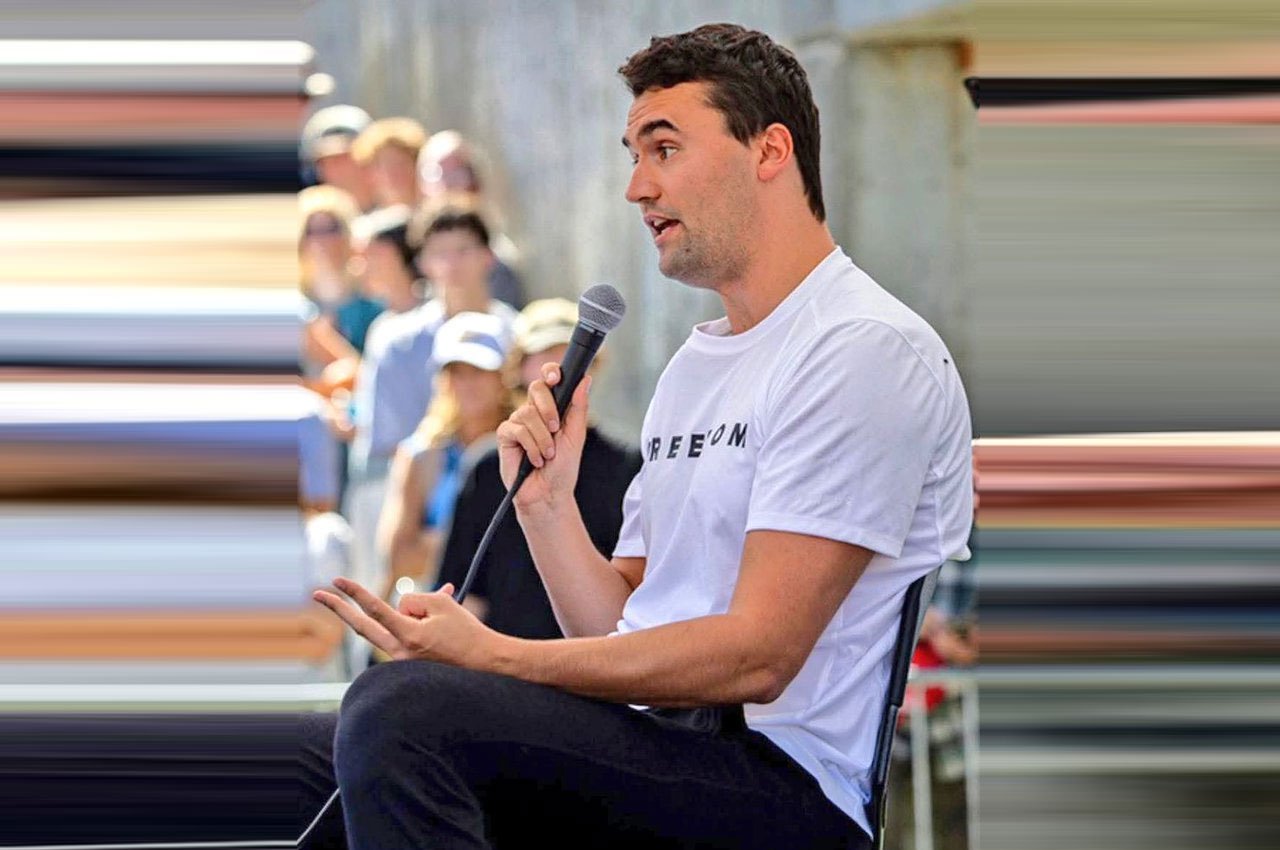
The recent killing of U.S. conservative commentator Charlie Kirk has brought fresh attention to his controversial remarks on the Pahalgam terror attack and India’s Operation Sindoor. In May 2025, after terrorists killed over twenty tourists in Pahalgam, India launched air and ground strikes targeting terror camps across Pakistan and Pakistan-occupied Kashmir. Just days later, Kirk addressed the escalating situation on his podcast “What the Heck is Going on in India!” and delivered a blunt assessment of the conflict, insisting that America must stay out of it, reported Hindustan Times.
Kirk said that “India and Pakistan are on the verge of war … Pakistan is 100% Muslim … India is mostly Hindu. They don’t care for each other much at all.” He referred to Pakistan as a “very, very sneaky actor,” recalling its history of sheltering figures such as Osama bin Laden. On fears of nuclear escalation, Kirk dismissed the likelihood, arguing that the principle of mutually assured destruction made such an outcome improbable. He saw India’s strikes under Operation Sindoor as effectively calling Pakistan’s bluff.
His most striking remark was his insistence that the U.S. role should be limited to moral support. “This is not our war … this is not our conflict to get involved in,” he stated, drawing a sharp line between offering solidarity to India and engaging in any military intervention.
Why His Stand Resonates
Although Kirk is not a policymaker, his stance reflects a significant trend in U.S. conservative thought that favours restraint in foreign entanglements. His words carry weight because of his influence across podcasts, YouTube channels, and conservative media outlets, shaping how ordinary Americans perceive conflicts abroad.
The India-Pakistan conflict, with its volatile mix of religion, history, and nuclear capabilities, has always drawn international scrutiny. Kirk’s comments, delivered in his blunt style, put a spotlight on how global observers frame the crisis: as a regional war best left to the countries involved, rather than another arena for American intervention.
The Latest Context After Operation Sindoor
In India, Operation Sindoor was defended as a targeted, proportional response. Jammu & Kashmir’s Chief Minister Omar Abdullah explained that India had struck nine sites linked to terrorism, taking care to avoid civilian or military infrastructure. Pakistan, on the other hand, denied some of India’s claims and criticised what it saw as exaggerated narratives.
Globally, the debate continues over responsibility for the Pahalgam attack and the legitimacy of India’s retaliation. Yet, even as diplomats and governments weighed in cautiously, voices like Kirk’s from the U.S. media sphere added an additional layer of commentary. His remarks also tied into his longstanding scepticism of immigration and H-1B visas, where he has often claimed that Indian workers displace Americans—a point that made his comments on India and U.S. interests more controversial.
Implications Going Forward
Kirk’s perspective is unlikely to translate directly into U.S. policy, but it highlights how American conservatives are framing India-Pakistan tensions. By casting Pakistan as the villain and cautioning against American involvement, he reinforced his broader “America First” narrative. His words also underline the diplomatic sensitivity of such conflicts: when prominent figures describe the crisis in stark religious and cultural terms, it risks complicating already fragile diplomatic engagements.
The episode also shows how swiftly global conflicts become part of the international conversation. A terror attack in Pahalgam and India’s military response quickly drew commentary from across the world, amplified by podcasts, social media, and 24-hour news. These narratives, whether official or not, shape how audiences abroad interpret conflicts that may otherwise seem distant.
Final Thought
Charlie Kirk’s intervention after the Pahalgam terror attack and Operation Sindoor underscores the intersection of media, foreign policy, and public opinion. By calling Pakistan a “sneaky actor,” dismissing fears of nuclear war, and urging the United States to avoid involvement, Kirk captured the sentiment of a political current in America that prioritises domestic concerns over international conflicts. As India and Pakistan continue to navigate the fallout of Pahalgam and Operation Sindoor, the resonance of such international voices shows just how globalised the battle of perception has become.
Photo Source: X
For more stories click here
Follow us for latest updates: