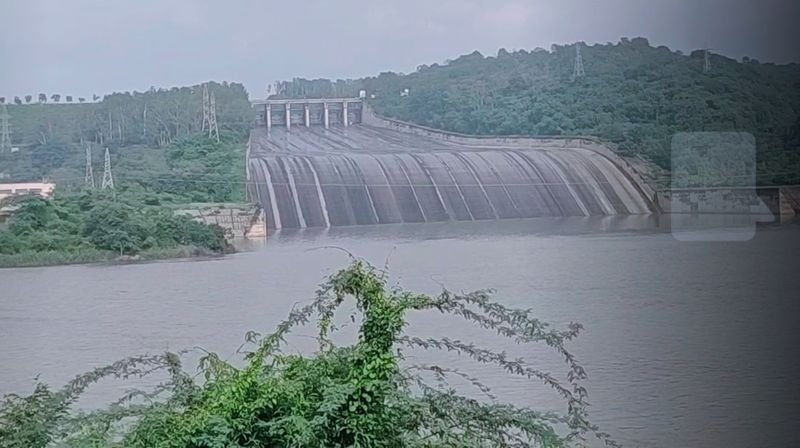
As water levels in Punjab’s major dams rise, the state government has set up control rooms in all 23 districts to monitor and manage the situation proactively. According to The Tribune, the move comes as water in Bhakra, Pong, and Ranjit Sagar dams inches closer to their maximum capacities. Authorities aim to keep residents safe through enhanced surveillance and real-time response systems.
Rising Waters and State Response
Following recent heavy rains in the hilly regions, Punjab’s key reservoirs – Bhakra Dam, Pong Dam, and Ranjit Sagar Dam – are seeing a steady rise in water levels. Although they currently remain within safe limits, the Bhakra Dam reads at 1,637.4 feet (with a full capacity of 1,680 feet), the Pong Dam is at 1,373.08 feet (capacity: 1,390 feet), and the Ranjit Sagar Dam stands at 1,694.64 feet (capacity: 1,731.55 feet).
In light of this, the Punjab government has operationalized dedicated control rooms in each of the 23 districts. Staffed around the clock, these facilities are equipped to monitor flood-prone zones and important waterways. Deputy Commissioners have been instructed to relay early warnings as needed and to coordinate relief measures under the guidance of junior engineers supervising these centers.
A Precautionary Push Amid Rising Concerns
This proactive approach is designed to anticipate and mitigate any potential emergency before situations escalate. With dam water approaching higher thresholds, real-time monitoring of rivers and drainage systems is underway across vulnerable areas of the state.
The government’s decision reflects lessons from previous flood events and aligns with modern disaster-management strategies. Instead of reacting post-crisis, these control rooms serve as nerve centers for early detection, swift communication, and immediate mobilization of resources—setting the stage for a more resilient and responsive infrastructure.
Strengthening District-Level Coordination
Every control room is placed under the supervision of a junior engineer, responsible for coordinating with local officers, forecasting water behavior, logging data, and transmitting information to Deputy Commissioners and higher authorities. This tiered structure aims to bridge field-level feedback with strategic decision-making.
Deputy Commissioners are also on heightened alert, tasked to manage inter-departmental coordination within their districts. From the Revenue and Irrigation departments to Municipal bodies and local police, their role involves ensuring citizens receive timely alerts and evacuation notices if necessary.
Should any dam edge closer to critical limits, these control rooms are primed to activate contingency protocols. Pre-positioned resources and designated safe zones may come into play immediately.
Engaging Communities and Building Resilience
While the technical infrastructure takes centre stage, community awareness remains equally pivotal. Residents in flood-prone belts may soon receive public messaging on precautionary steps, emergency contact numbers, and evacuation procedures—emphasizing community readiness alongside institutional vigilance.
This dual strategy—strong district-level coordination supported by localized preparedness—sets a solid benchmark in Punjab’s flood-response ecosystem.
What Lies Ahead?
Experts agree the real test will unfold if dam levels climb further. Prolonged rain or unexpected inflows could put pressure on spillways, necessitating controlled water release or emergency action. Punjab’s timely setup of control rooms offers a fighting chance to manage such outcomes effectively.
As weather patterns grow more erratic due to climate change, this model of early warning and local surveillance could be key to safeguarding life and property. The Punjab government’s initiative may serve as a blueprint for other states to replicate ahead of monsoon peaks.
Final Thoughts
Punjab’s setup of control rooms across all 23 districts amid rising dam water levels showcases a forward-thinking strategy. By combining real-time surveillance, institutional readiness, and local coordination, it strengthens the state’s ability to confront and manage potential floods. As the monsoon continues, this robust framework will form the backbone of public safety in the days ahead.
Photo Credit: The Tribune