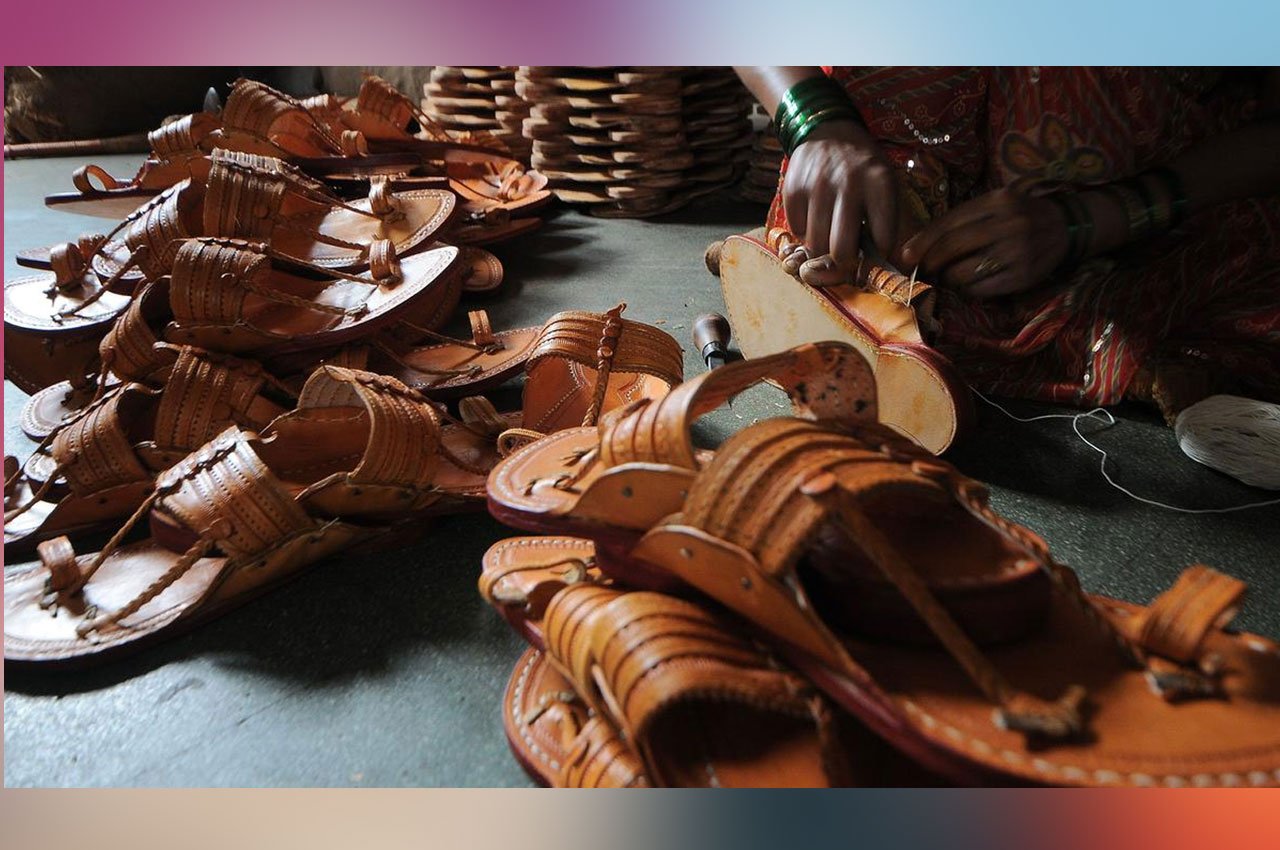
Prada Acknowledges Kolhapuri Chappals. Photo Credit: The Hindu
Luxury brand Prada has acknowledged Kolhapuri chappals inspiration after widespread backlash over its Spring/Summer 2026 men’s collection, which featured sandals resembling traditional Kolhapuri chappals without crediting their Indian origin. The admission comes a few days after powerful social media and political criticism highlighted the lack of recognition for India’s heritage craft and its artisans.
Italian fashion house Prada first showcased the sandals at Milan Fashion Week, describing them only as “leather sandals.” Their debut drew immediate anger from Kolhapur-based artisans, cultural leaders, and fashion commentators, who accused the brand of cultural appropriation and urged legal and moral accountability. The sandals, priced at around ₹1.2 lakh, starkly contrasted with authentic Kolhapuri chappals sold in India for ₹300–1,500.
According to The Hindu, under mounting pressure from Indian artisans and activists, Prada issued an official statement bringing the sandals into the open as being “inspired by traditional Indian handcrafted footwear, with a centuries‑old heritage.” The company also confirmed it is in dialogue with the Maharashtra Chamber of Commerce and artisan communities and emphasized its commitment to responsible design and cultural exchange.
Kolhapuri chappals, which received a Geographical Indication (GI) tag in 2019, involve generations of leather craftsmanship in Maharashtra and Karnataka. Proud of their cultural roots, local artisans described the Prada move as symbolic of “daylight robbery”, echoing concerns about intellectual property and the global misuse of indigenous designs without credit or fair compensation.
NCP (SP) leader Sharad Pawar suggested traditional products like these should be patented to prevent such appropriation. He also criticized global fashion houses for failing to honor the origin and artisanship behind these iconic Indian products. Pawar advocated for legal steps to safeguard cultural heritage and provide justice to those whose ancestral crafts are misused.
Following the backlash, advocacy groups called on the Indian government to enforce protections under the GI Act and support artisans in pursuing legal recourse. BJP MP Dhananjay Mahadik also initiated discussions with the Maharashtra government, urging them to hold Prada legally accountable while pushing for ethical responsibility by global brands.
Economists and cultural experts say this incident highlights opportunities for India’s traditional crafts to enter the international market authentically—through storytelling, branding, and fair monetization. As one opinion piece in the Economic Times noted, instead of Western appropriation, India should lead in bringing its indigenous arts to global attention.
Prada has confirmed that the sandals shown are still in a design stage and may not be commercialized, indicating that the matter could be resolved with constructive collaborations. The brand conveyed an openness to collective partnerships and strengthened crediting mechanisms, though some remain skeptical.
This controversy echoes past incidents when other international brands borrowed from Indian textiles and design without due credit—the Kolhapuri case may become a turning point. It reinforces the argument that economic justice for artisans requires more than just GI tags. Structural changes in patenting, licensing, and global cultural ethics are needed to ensure heritage crafts gain both visibility and fair benefits.
As for Prada, the brand now faces both reputational and potential legal pressure, especially if the sandals enter the market without due acknowledgment. The level of credit and financial support offered to artisan communities will likely serve as a test of how seriously global fashion houses engage with cultural ethics.
For more entertainment stories click here
Follow us for latest updates: