Photo Credit: @narendramodi (X)
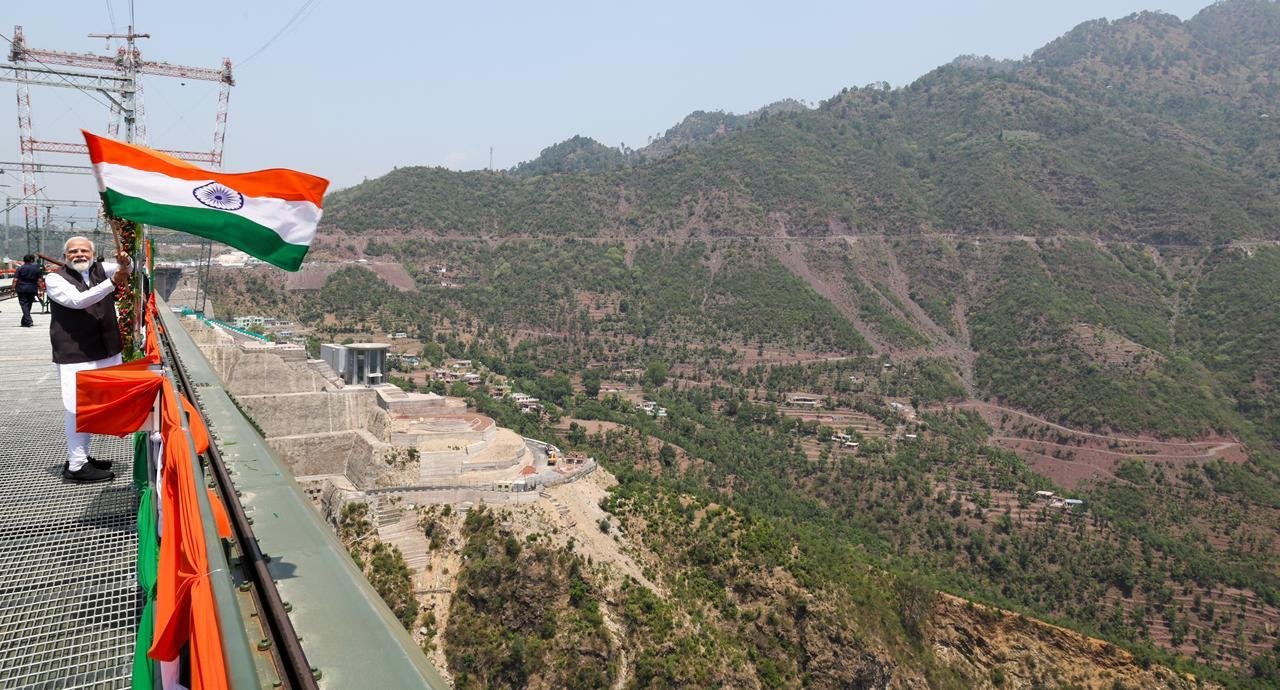
In a landmark visit to Jammu and Kashmir—his first since the tragic Pahalgam terror attack—Prime Minister Narendra Modi inaugurated two of India’s most significant infrastructure feats: the Chenab Railway Arch Bridge and the Anji Khad Cable-Stayed Bridge. This visit not only symbolized a bold message of national resolve but also marked a turning point in J&K’s journey towards greater connectivity and economic integration.
Chenab Rail Bridge: Engineering the Impossible
Standing 359 meters above the Chenab River in Reasi district, the Chenab Bridge is now the world’s highest railway arch bridge, taller than the Eiffel Tower. Built as part of the ambitious Udhampur-Srinagar-Baramulla Rail Link (USBRL) project, the bridge connects the Kashmir Valley with the rest of the Indian railway network for the first time in history.
With a length of 1,315 meters, this marvel can withstand wind speeds up to 260 km/h and has a lifespan of 120 years. Its inauguration was met with national pride, as the bridge is seen as a symbol of India’s unmatched engineering capabilities.
Anji Khad Bridge: India’s First Cable-Stayed Rail Bridge
Alongside the Chenab Bridge, PM Modi also unveiled the Anji Khad Bridge, India’s first cable-stayed railway bridge. Spanning 473 meters, with a height of 196 meters, the Anji Bridge is supported by a single asymmetrical pylon and is designed to handle high-speed train operations.
This bridge plays a vital role in completing the USBRL corridor and overcoming the region’s harsh geography and seismic challenges.
Strategic, Economic, and Symbolic Importance
The timing of PM Modi’s visit—just weeks after the cowardly terror attack on an army convoy in Pahalgam—carried deep symbolism. It sent out a clear message: terror cannot derail development. Inaugurating these infrastructure giants in the same region where violence recently tried to cast its shadow was a powerful statement of India’s resilience and forward momentum.
More than symbolism, the USBRL project is set to revolutionize mobility in Jammu and Kashmir. The newly completed section will reduce the travel time between Katra and Srinagar to just 3 hours via Vande Bharat Express, boosting tourism, logistics, and regional commerce.
Challenges on the Ground: Local Voices and Concerns
While the bridges have been celebrated nationally, some villagers in areas like Kauri and Sersandwan have raised concerns about land displacement, drying water sources, and the absence of train halts in their vicinity. As India pushes forward with high-tech infrastructure, it becomes equally important to ensure equitable benefits for local communities.
A Vision of Vikas and Vishwas
Prime Minister Modi’s speech during the inauguration emphasized his government’s commitment to “Vikas aur Vishwas” (development and trust) in Jammu and Kashmir. He highlighted that what was once considered a dream—rail connectivity to the Kashmir Valley—has now become a reality.
This visit was not just about steel and concrete. It was about connection—both physical and emotional. It was about telling the people of Jammu and Kashmir that they matter, that India stands with them, and that the future will be driven by progress, not fear.