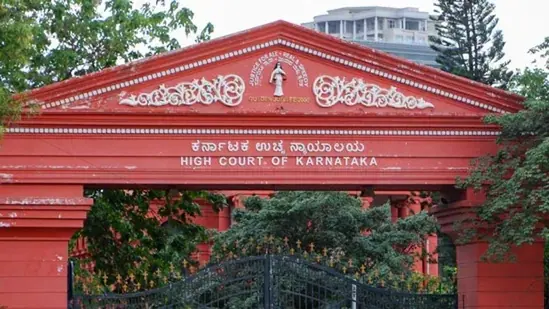
In a major blow to the Siddaramaiah-led Congress government, the Karnataka High Court has stayed the state’s recent order imposing restrictions on the activities of private organisations in public spaces. The move effectively suspends the government’s attempt to bar such groups from using school grounds and public premises without prior approval reported Hindustan Times.
The stay order was issued by the Dharwad Bench of the High Court, which has listed the matter for further hearing on November 17. The court’s intervention comes after multiple petitions challenged the government’s directive, arguing that it violated the constitutional rights of association and expression.
The Siddaramaiah government had reissued a 2013 circular earlier this month, citing the need to “preserve and properly utilise government property, playgrounds and public assets.” However, the timing of the move sparked political debate, as it was widely seen as an attempt to curtail the activities of the Rashtriya Swayamsevak Sangh (RSS) and similar organisations.
The controversy began when Karnataka’s IT and Biotechnology Minister, Priyank Kharge, wrote to Chief Minister Siddaramaiah, alleging that government officials were attending RSS programmes in violation of service conduct rules. Rule 5(1) of the Karnataka Civil Services (Conduct) Rules, 2021, prohibits government employees from participating in political activities or being associated with political organisations. Following Kharge’s letter, a government employee in Raichur was suspended for attending an RSS event.
The opposition has accused the Congress government of using administrative orders to settle ideological scores. BJP leaders claimed the order was politically motivated and intended to target specific groups. The government, on the other hand, defended its stance, arguing that the circular was a continuation of an existing policy meant to ensure neutrality in the use of public property.
With the High Court’s stay in place, the directive will remain suspended until the next hearing. The ruling is being seen as a temporary reprieve for private organisations and social groups that use government premises for cultural or community activities.
The case has reignited the debate over the fine line between administrative control and freedom of association. As the legal battle continues, the Siddaramaiah government faces criticism for what many see as an avoidable controversy that risks alienating civil society groups.
Photo Credit: HT