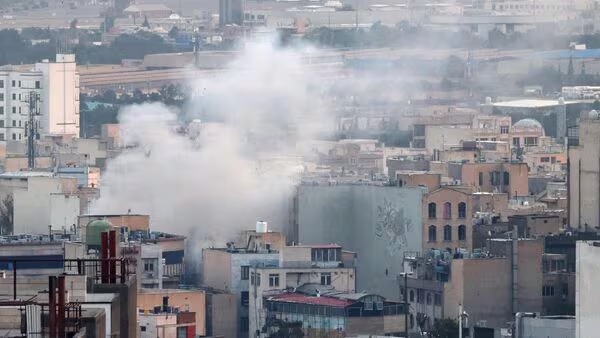
Rescue teams and firefighters inspect the aftermath of an Iranian missile strike in Tel Aviv, Israel. Photo Credit: AP
The ongoing Israel–Iran conflict took a dangerous turn this weekend, with Iran accusing Israel and the United States of violating international norms and targeting civilian nuclear infrastructure in clear defiance of United Nations charters. With US military involvement becoming more direct, and missile exchanges intensifying, the crisis threatens to spiral into a full-blown regional war.
Iran Accuses Israel of UN Charter Violation After Strikes on Nuclear Sites
After a series of Israeli missile strikes on Iran’s nuclear facilities in Isfahan, Fordow and Natanz, Tehran has condemned the attacks as a breach of international law and a violation of UN protocols regarding civilian nuclear infrastructure. Iranian Foreign Minister Abbas Araghchi called the Israeli and US airstrikes “an act of war” and “a betrayal of diplomacy.” Supreme Leader Ayatollah Khamenei warned that the consequences for such actions “would be everlasting.”
The strikes reportedly targeted uranium enrichment sites and drone storage facilities. At least two top IRGC figures, Saeed Izadi and Behnam Shahriyari, were killed in the attack.
Iran Responds with Heavy Missile and Drone Barrage
In retaliation, Iran launched one of its most significant missile barrages in recent history, targeting multiple Israeli cities including Haifa, Tel Aviv, Beersheba and Jerusalem. Dozens of ballistic missiles and suicide drones were fired, leading to explosions across central and northern Israel. While Israel’s Iron Dome intercepted the majority, falling debris injured at least 11 civilians and damaged homes and infrastructure.
The Iranian military claims the attacks were a proportional response to what it described as a foreign-sponsored aggression on its sovereign territory.
US B‑2 Bombers Enter the Theatre, Trump Confirms Joint Strikes
In a sign of rising escalation, six US B‑2 stealth bombers were deployed to Guam and Diego Garcia, equipped with bunker-busting munitions. Former US President Donald Trump, who is seeking re-election, confirmed that US forces assisted Israel in the strikes on Iran’s nuclear sites and warned of “more decisive action” if Iran continues on its path.
American involvement in this round of hostilities marks a significant shift from indirect support to direct military engagement, drawing global concern over potential escalation across the Gulf region.
Heavy Civilian Toll on Both Sides
The human cost of the renewed Israel–Iran missile strikes continues to rise. Iranian officials report over 430 deaths and nearly 3,500 injuries since Israeli operations began. In Israel, at least 24 civilians have died and over 1,200 have been wounded. In one of the most serious incidents, an Iranian missile struck Soroka Medical Center in Beersheba, causing panic, power outages and multiple injuries.
Hospitals in both countries are overwhelmed, and emergency response teams are stretched as missile alerts continue.
Diplomatic Channels Collapse, UN Raises Alarm
As the military campaign intensifies, efforts to de-escalate have largely failed. The much-anticipated nuclear dialogue in Muscat was canceled. Iran’s criticism of UN inaction over attacks on civilian nuclear facilities has intensified, with Tehran demanding a special Security Council session. UN Secretary-General António Guterres has expressed “grave concern” over the situation and reiterated the global body’s stance on protecting nuclear sites under its charter.
Meanwhile, leaders from France, Egypt, Turkey, and the UAE have urged restraint, but no ceasefire talks are currently underway.
Regional Spillover Concerns Grow
The Israel–Iran conflict is no longer limited to the two countries. Yemen’s Houthis have warned they may begin targeting US and Israeli naval vessels if attacks on Iran continue. Iraq, Syria and Lebanon have all seen increased military readiness among Iran-backed groups. Analysts fear the next stage could draw in proxy forces from across the Middle East, turning this into a prolonged, multi-front war.
With US air support now active, Iran’s accusations of UN violation and increasing civilian casualties, the stakes could not be higher. What began as retaliatory strikes now threatens to become one of the most serious confrontations in the Middle East in years, testing both diplomatic resolve and military restraint.