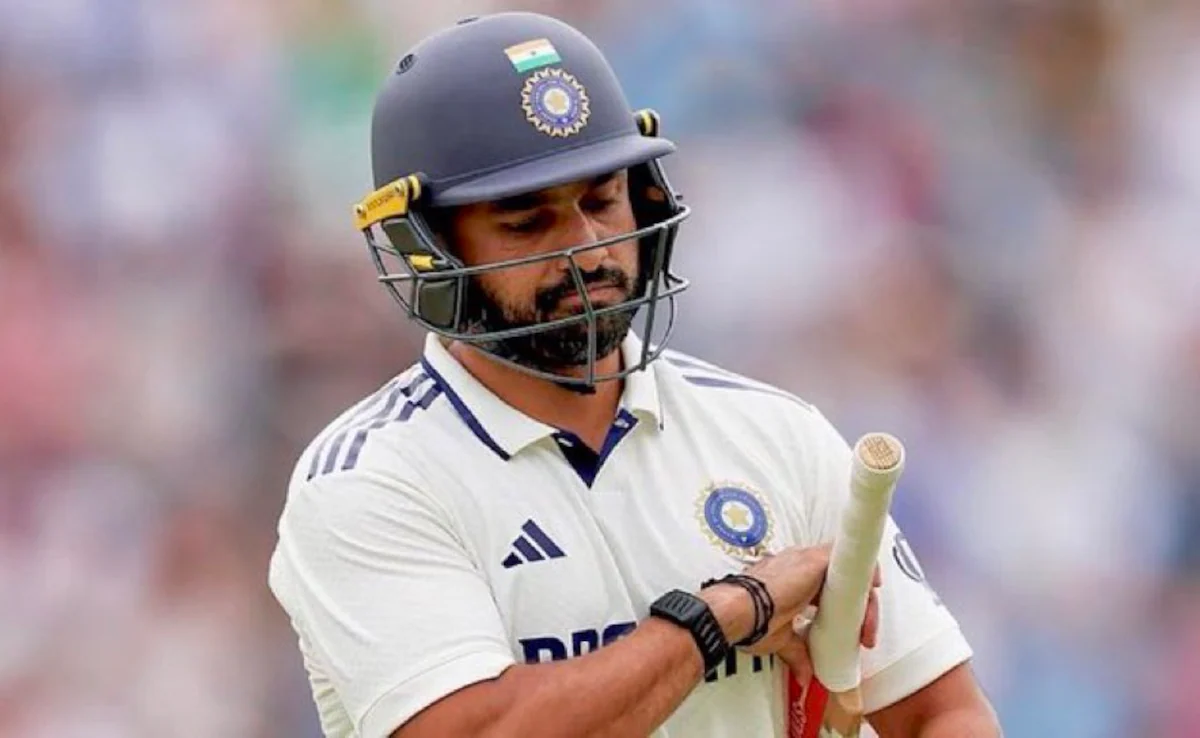
Photo Credit: BCCI
India has made significant adjustments to its playing XI ahead of the crucial second Test against England at Edgbaston. Following a heavy defeat at Headingley, the visitors trail 0–1 in the series and are eyeing a strong comeback. The team management has brought in Washington Sundar, promoted Karun Nair to No. 3, and included Nitish Reddy, reflecting a tactical shift aimed at strengthening spin options and solidifying the middle order.
Sundar Adds Spin Depth, Nair Given a Lifeline
Washington Sundar replaces Sai Sudharsan in a move that brings more balance to the team. A reliable off-spinner and a capable lower-order batter, Sundar’s inclusion gives India an additional spin option while bolstering their batting lineup. His ability to hold an end and contribute with the bat could be crucial in English conditions, especially if the pitch slows down later in the Test.
Karun Nair, who played at No. 6 in the first Test, has been promoted to the pivotal No. 3 spot. While his return to Test cricket at Headingly was underwhelming, team management is showing faith in his experience and past performances. Nair, who has a Test triple century to his name, now has a golden opportunity to re-establish himself as a dependable middle-order batter.
Nitish Reddy In for Shardul Thakur
In another notable change, Nitish Reddy replaces Shardul Thakur. The decision is rooted in the need to stabilize the batting lineup while still maintaining a seam-bowling option. Reddy brings all-round capabilities, offering batting reinforcement and medium-pace bowling that can be useful in English conditions.
Two Spinners Strategy Confirmed
India is expected to play with two spinners for the Edgbaston Test, with Ravindra Jadeja partnering Washington Sundar. Assistant coach Ryan ten Doeschate has hinted that the team is banking on spin to gain an advantage, especially on a pitch that may offer turn as the game progresses. The two-pronged spin attack could be key in countering England’s aggressive batting style, particularly during the middle overs.
Bumrah’s Workload Management Under Watch
Jasprit Bumrah, who bowled 44 overs in the first Test, may be rested as part of workload management. While he remains available for selection, team management might opt to rotate him to ensure longevity over the course of the five-Test series. If rested, Akash Deep or Arshdeep Singh could make the cut, partnering with Mohammed Siraj and Prasidh Krishna in the pace department.
Predicted Playing XI for India
- Yashasvi Jaiswal
- KL Rahul
- Karun Nair
- Shubman Gill (Captain)
- Rishabh Pant (Wicketkeeper)
- Ravindra Jadeja
- Nitish Reddy
- Washington Sundar
- Mohammed Siraj
- Prasidh Krishna
- Akash Deep / Arshdeep Singh
This XI emphasizes flexibility, with a deeper batting lineup and a balanced attack comprising both spin and pace.
Tactical Rethink After Headingley Collapse
India’s decision to shake up the playing XI stems from the batting collapse and inability to take 20 wickets at Headingley. The inclusion of Sundar and the promotion of Nair indicate a desire to reinforce the spine of the team. Meanwhile, Reddy’s selection provides batting insurance lower down the order and a fourth seam option.
This approach is not just reactive but strategic—acknowledging the need to adapt quickly in a high-stakes away series. Edgbaston traditionally offers help to bowlers early on, but it can also assist spinners as the Test progresses. India’s new lineup is well-suited to exploit such conditions.
England’s Unchanged XI a Statement of Confidence
In contrast, England has retained the same XI that dominated at Headingley. Their unchanged team signals confidence and cohesion, placing the onus on India to make the adjustments necessary to level the series. Ben Stokes continues to play despite not being fully fit, and Joe Root, Jonny Bairstow, and Ollie Pope form a solid core for the English middle order.
follow us for latest updates: