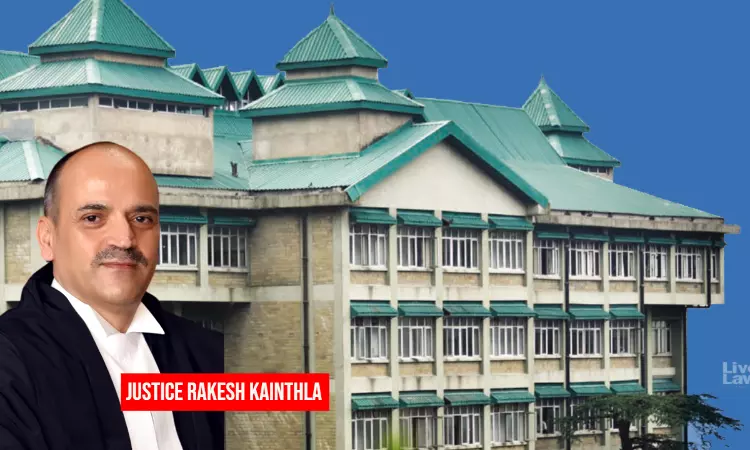
The Himachal Pradesh High Court has ruled, in a significant legal judgment, that injuries caused by human teeth do not qualify as being inflicted with a “deadly weapon” under Section 324 of the Indian Penal Code (IPC). Justice Rakesh Kainthla emphasized that the trial court erred in convicting the accused under this provision, as the term “dangerous weapon” does not encompass human teeth. According to Live Law , the judgment was delivered on August 30, 2025, in the case of Khelo Ram vs. State of Himachal Pradesh.
Background of the Case
The case revolved around an alleged late-night intrusion on March 5, 2007. A woman, sleeping with her four-year-old child, woke to noises and found the accused inside her room. She claimed that he attempted to strangle her and the child, kissed her forcefully, grabbed her inappropriately, and bit her cheek.
In its initial verdict, the trial court convicted the accused under multiple IPC provisions, including Sections 451 (house trespass), 354 (assault or criminal force on a woman), 323 (voluntarily causing hurt), and 324 (causing hurt with dangerous weapons). The sessions court upheld the judgment, citing alignment between the victim’s testimony and medical evidence.
High Court’s Analysis
On revision, the High Court acknowledged the credibility of the victim—who promptly reported the incident at 1:45 a.m. the same night—thus ruling out the possibility of fabrication. However, it drew the line at Section 324’s applicability. The bite injury, while unlawful and violent, lacked the element of a “dangerous weapon,” which is central to Section 324. Consequently, the conviction under that provision was set aside.
The court, however, upheld convictions under Sections 451, 354, and 323, recognizing the seriousness of trespassing at night and assaulting a person in her own home. The judge observed that a house is a person’s sanctuary, and committing such offenses under those circumstances constitutes a grave violation deserving penalty, though not under Section 324.
Legal Precedent and Broader Context
This ruling echoes a precedent set earlier this year by the Bombay High Court, which ruled that bite injuries should be tried under Section 323 (voluntarily causing hurt) and not Section 324, since human teeth cannot be considered “dangerous weapons.” That judgment had also drawn from the Supreme Court’s 2004 decision in Shakeel Ahmed vs. State of Delhi, which held that human teeth cannot qualify as deadly weapons under Section 326 IPC.
The Himachal Pradesh High Court’s judgment further reinforces this principle, bringing clarity to how such cases should be legally categorized across India.
Why This Ruling Matters
This decision reaffirms the importance of accurate legal classification of violent acts. While biting can inflict serious harm, the court clarified that such acts must fall under provisions that reflect the true nature of the instrument used—in this case, Section 323 rather than Section 324. The ruling ensures consistency with statutory interpretation and prevents misapplication of harsher provisions.
Photo Credit: Live Law