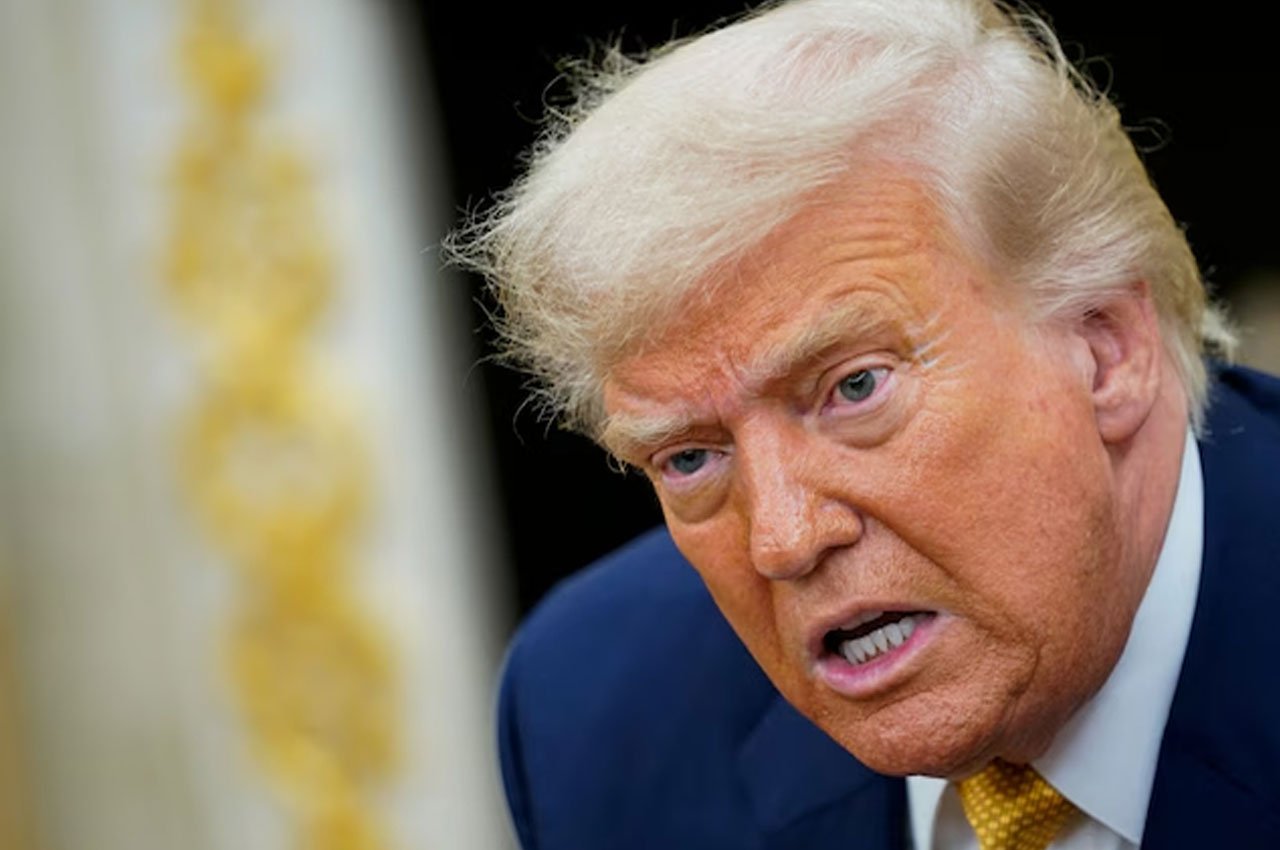
U.S. President Donald Trump sticks to 25% tariff on India, while offering relief to Bangladesh and Pakistan, in a dramatic realignment of trade priorities under his aggressive “reciprocal tariff” policy. According to CNBC 18, the move cements India’s position as a prime target in Trump’s crackdown on trade deficits, even as neighbouring countries negotiated concessions just days before the August 1 implementation deadline.
India Hit With Full Tariff Blow
Despite last-minute efforts by Indian officials, the Trump administration has gone ahead with the 25% reciprocal tariff on Indian exports, citing India’s continued trade surplus and energy engagement with Russia. Key sectors including pharmaceuticals, engineering goods, textiles, and auto parts are expected to bear the brunt of these duties.
India’s annual trade surplus with the U.S., which stands at around USD 40 billion, has long been a point of contention. However, the sudden imposition of such a high flat-rate tariff is being viewed by Indian trade bodies as “economically damaging and diplomatically regressive.”
Commerce Minister Piyush Goyal responded strongly, stating that while India remains open to constructive trade dialogue, it “will not succumb to economic pressure tactics.”
Bangladesh and Pakistan Secure Softer Terms
In stark contrast, Bangladesh succeeded in negotiating its tariff rate down to 20%, a significant cut from the earlier proposed 35%. The breakthrough came after intense discussions between Dhaka and Washington, highlighting the U.S.’s openness to accommodate developing nations that are “actively restructuring their trade relationships.”
For Bangladesh, the concession is critical for its garments and textiles industry, which depends heavily on U.S. buyers. Industry insiders in Dhaka welcomed the outcome, calling it a “lifeline for exports.”
Pakistan too benefitted from Trump’s recalibration, with its tariff reduced to 19% from a potential 25%. The announcement coincided with the U.S.–Pakistan Strategic Energy Dialogue, where Trump revealed plans for future American investment in Pakistan’s untapped oil reserves—a move seen as a geopolitical signal to India.
Diplomatic Unease and Political Fallout in India
The decision to maintain a 25% tariff on India while offering flexibility to its neighbors has triggered a political and strategic debate in New Delhi. Opposition leaders questioned Prime Minister Modi’s handling of bilateral relations with the U.S., calling the tariff a “diplomatic failure” and a “warning sign for India’s global positioning.”
Foreign policy analysts suggest that Trump’s decision was not just economic, but also deeply strategic. India’s continued import of Russian oil, weapons, and fertilisers has irked Washington. U.S. officials had reportedly urged India to reduce its Russian ties as a condition for softer trade terms – an offer India resisted.
Strategic Repercussions in South Asia
Trump’s tariff decisions may reshape trade and strategic alliances in South Asia. The energy partnership announcement with Pakistan, combined with reduced tariffs, is being read by many as a subtle U.S. pivot toward Islamabad. While the U.S. maintains strong ties with India on defense and tech fronts, the recent actions signal a willingness to diversify strategic partnerships.
For Bangladesh, the reduced tariff is a diplomatic win. It not only boosts Dhaka’s trade but positions it as a potential alternative supply hub for U.S. retailers looking to shift away from over-dependence on China and India.
India now faces the risk of losing price competitiveness in key markets, especially in sectors like cotton garments, APIs (Active Pharmaceutical Ingredients), and automotive components.
The Road Ahead for India
With the 25% tariff now active, Indian exporters are bracing for supply chain disruptions and potential order cancellations. India’s trade ministry is expected to resume negotiations with Washington, aiming for sector-wise exemptions or a phased rollback.
Economists urge India to double down on diversification—both in terms of export destinations and product mix. New trade corridors in Africa, Latin America, and Southeast Asia are being explored, but the U.S. remains India’s largest single export market, making a long-term resolution with Washington critical.
The broader challenge lies in balancing foreign policy autonomy – especially with Russia – while protecting export-driven sectors from external shocks.
Photo Credit: CNBC
For more spotlight stories click here
Follow us for latest updates: