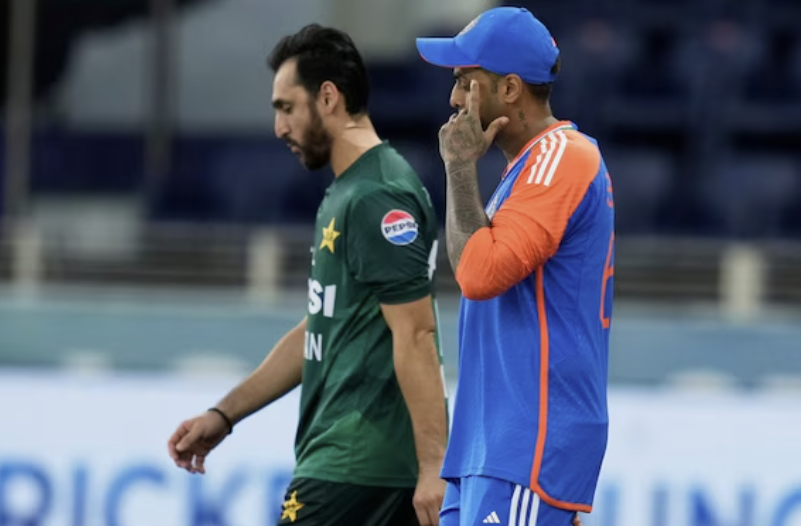
Sport has long been celebrated as a realm where talent, teamwork, and the human spirit rise above divisions of nationality, religion, or ideology. Cricket, in the subcontinent, occupies a space that is almost sacred: it evokes passion, pride, and collective memory. Yet, every so often, it also mirrors the deeper tensions that exist between nations. The recent Asia Cup incident, in which the Indian cricket team refused to shake hands with Pakistani players, is a case in point. Pakistan lodged a formal protest, framing the handshake refusal as a breach of sporting decorum; the world watched as what should have been a simple gesture of respect turned into a political flashpoint.
The backdrop is important. India and Pakistan share a long and complicated history of military and political confrontations; tensions along the border have been heightened recently due to Operation Sindoor, India’s targeted cross-border initiative aimed at counterterrorism operations. These developments create an environment where every public interaction between the two nations is scrutinized not just for symbolism but for perceived intent. In such a climate, gestures on the sports field acquire heightened significance, and refusal to engage in what is conventionally considered sportsmanship resonates far beyond cricket.
Cricket matches between India and Pakistan are never just games: they are laden with expectations, anxieties, and nationalistic fervor. Fans, media, and politicians invest meanings into every run, wicket, and handshake. Yet the essence of sportsmanship asks for a suspension of these pressures, even temporarily. A handshake is more than etiquette; it is a symbolic acknowledgment that rivalry on the field need not translate into animosity off it, that respect for the opponent is a fundamental principle of sport. When such gestures are withheld, criticism is inevitable and the debate spills into political discourse.
The controversy also raises questions about the role of sports as a platform for diplomacy and cultural connection. Cricket, like art, can transcend politics; it can teach empathy, patience, resilience, and grace under pressure. Players, administrators, and even fans have a responsibility to ensure that competitive spirit does not compromise mutual respect. Amplifying incidents such as handshake refusals risks shifting attention from the game itself—the skill, strategy, and artistry of cricket—to symbolic politics. Young athletes watching the match learn lessons not just about performance but about how rivalry is framed, and whether respect can coexist with competition.
Ultimately, the responsibility lies with all stakeholders to preserve the sanctity of sport. The India-Pakistan handshake controversy, while superficially about a gesture, opens a deeper conversation: how can cricket remain a space where talent and dedication rise above historical and geopolitical frictions? True sportsmanship is about meeting rivals as athletes first, as representatives of nations second; it is about acknowledging the humanity of the opponent, even amid broader conflicts and military tensions.
Cricket, if treated with the respect it deserves, can serve as a subtle bridge in an otherwise divided region. It is a reminder that, for the duration of the game, nations can interact in ways that prioritize fairness, skill, and human connection over political discord. The Asia Cup incident is a wake-up call for boards, players, and fans to reaffirm that sport can unite where politics divides, and that even a simple gesture, such as a handshake, carries the weight of diplomacy and shared values.
Photo Source: India Today
For more stories click here
Follow us for latest updates: