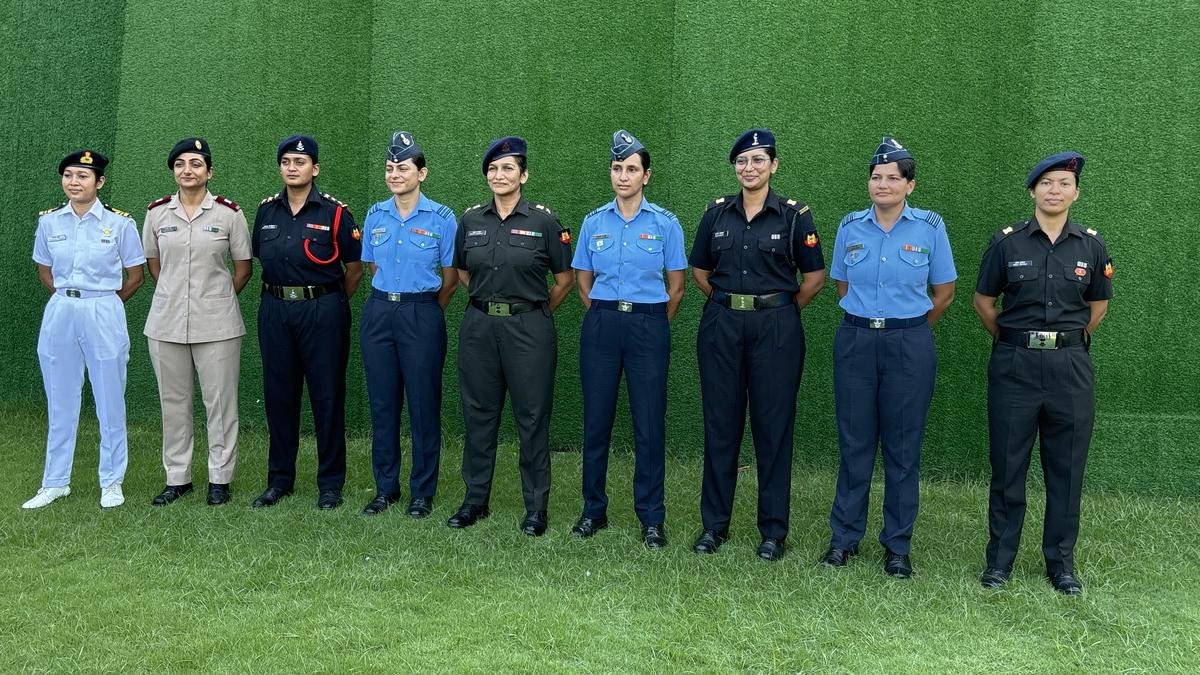
When ten women officers from the Army, Navy and Air Force step aboard the Indian Army Sailing Vessel Triveni and steer out from the Gateway of India on 11 September 2025, it will be easy to treat the spectacle as a PR triumph — a photogenic pause in the daily grind of defence bulletins. But this expedition is worth reading at three levels at once: as a tactical demonstration of seamanship, as a strategic message about India’s evolving force posture, and as an inflection point in the gender story of India’s armed forces. The trip is not merely a voyage around the globe; it is an argument about what modern militaries should look and feel like.
A first glance at the facts helps explain the attention. This is a tri-services, all-women round-the-world expedition on the IASV Triveni — ten officers representing the Army, Navy and Air Force — scheduled to set sail from Mumbai. The scale is not symbolic alone: the mission will traverse many thousands of nautical miles and confront real maritime hazards, not staged harbour tours. The Ministry of Defence and official channels have presented it as a bona fide circumnavigation, signaling institutional backing rather than a one-off vanity mission.
Seen historically, the voyage is the latest rung on a ladder already being climbed by Indian women in the Navy and broader defence services. India’s Navy has already produced high-profile all-women sea exploits — most recently the celebrated circumnavigation by two navy officers and earlier multi-member expeditions that proved the concept: women can plan, survive and lead long, isolated ocean passages. Those achievements converted a distant slogan about “equal opportunity” into a tested operational reality; the Triveni expedition accelerates that normalization from the cockpit and quarterdeck into a joint, tri-service context. The precedent matters because institutions rarely change by fiat; they change by cumulative performance that renders earlier objections moot.
Why should civilians care beyond the obvious symbolic value? First, because modern deterrence and presence are as much about perception as about platforms. Sea power is not only aircraft carriers and frigates; it’s also the soft power of presence, the strategic narrative that a nation projects when its personnel operate confidently far from home. An all-women tri-service expedition amplifies that narrative in new registers — diplomacy, cultural outreach, and public imagination. A country that trains and trusts women to cross oceans signals confidence in its human capital. That messaging has asymmetrical value in neighbourhoods where gender inclusion is still an emergent norm.
Second, this mission is a practical training and interoperability exercise in civilian clothing. Long-range sailing tests navigation, meteorology, engineering improvisation, sleep-management, medical contingency planning and small-boat leadership — all directly transferable to littoral operations, disaster relief, and search-and-rescue missions. Doing this in a tri-service mix — Army, Navy and Air Force officers living and working together at sea — generates lessons about cross-service mission culture long before they are needed in crisis theatres. The Triveni is, in that sense, an austere training vessel for jointness and resilience.
But aspiration must meet reality. Three caveats should temper the applause. One: public spectacle cannot substitute for systemic reform. High-visibility missions risk becoming alibis for underfunded, short-term diversity initiatives unless followed by sustained investments in training pipelines, family support structures, career-path adjustments and safety protocols. Two: tokenism is a real danger; the line between inspiration and a one-off stunt must be crossed only when the mission seeds lasting institutional change — more slots, more command responsibilities, and measurable promotion parity. Three: the mission’s domestic PR benefit must be coupled with an honest assessment of operational outcomes; publish the after-action reviews, share lessons learned publicly, and resist treating critique as disloyalty.
Policy implications are practical. Defence ministries should convert the symbolic goodwill into durable commitments: fund follow-on sailing schools, expand seamanship training to other branches, and integrate circumnavigation-grade exercises into tri-service professional military education curricula. Civilian agencies — shipping, fisheries and coastal administration — should be invited into the post-voyage debriefs to extract wider disaster-response lessons. Finally, make the recordings and logs public learning tools: nothing persuades skeptics like well-documented competence.
In country after country, tipping points in inclusion come less from declarations and more from visible, repeatable competence that burrows into organisational memory. The Triveni expedition can be such a tipping point for India — if it is treated not as an endpoint but as an opening: an operational experiment, a diplomatic bridge and a recruitment magnet. It will be a proud sight when the vessel clears the harbour; the real test will be whether the ripples from that departure reach the dockyards, staff colleges and promotion boards that shape the armed forces’ future. If they do, this voyage will have done more than circle the globe — it will have helped redraw who belongs at the wheel.
Photo Credit: HT