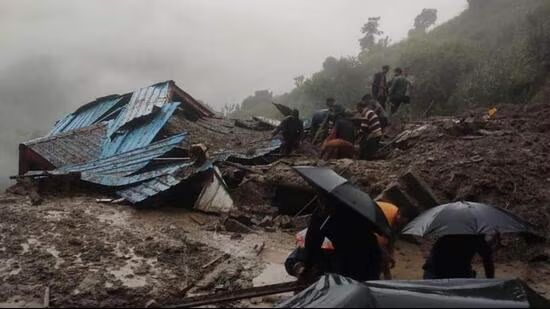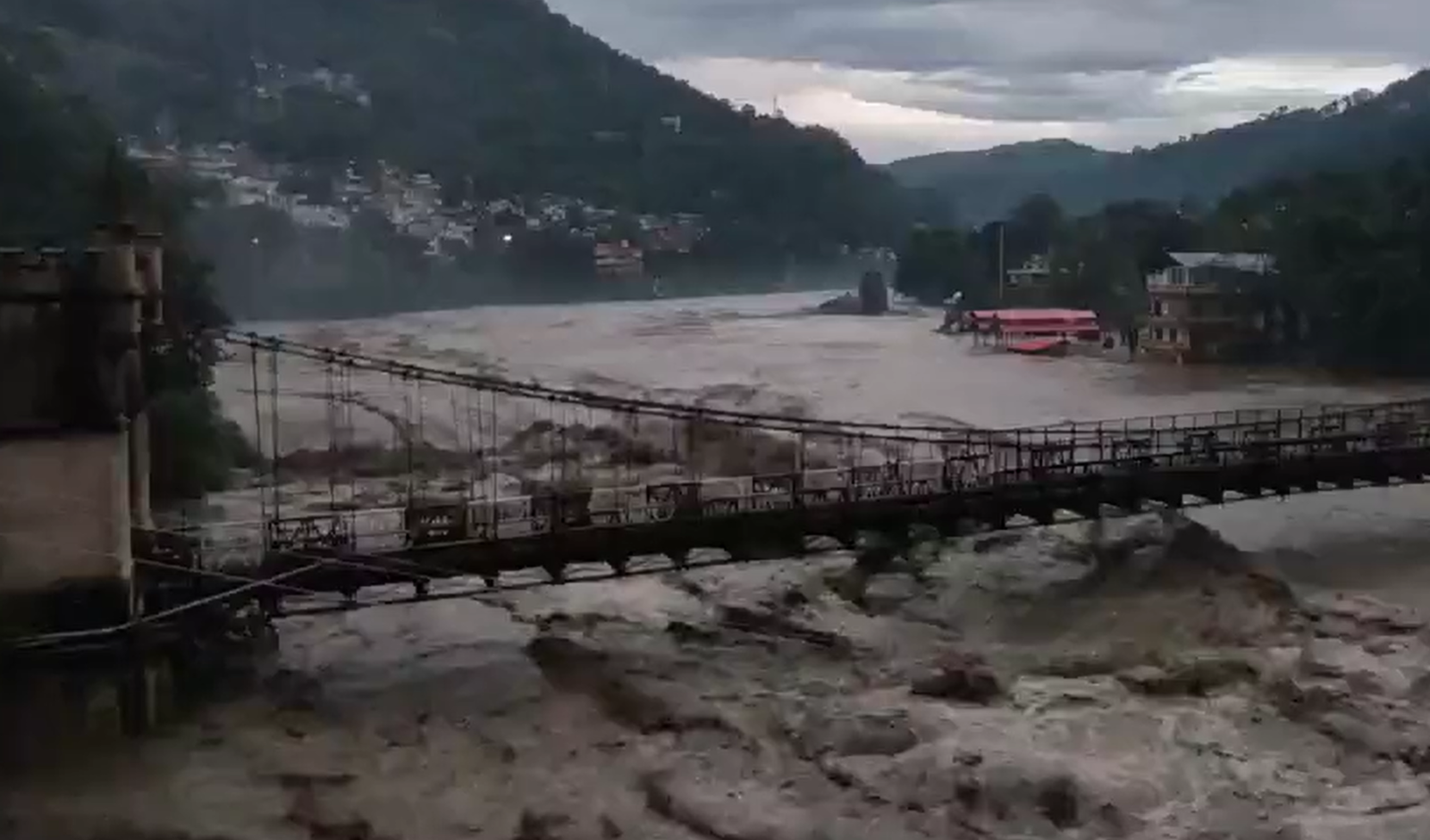
Himachal Pradesh continues to grapple with the devastating impact of an intense monsoon season, with officials confirming that the state has suffered losses exceeding ₹4,000 crore so far, reported The Hindu. Torrential rains, landslides, flash floods, and widespread damage to infrastructure have left the hill state reeling under one of its worst natural calamities in recent years.
Scale of Destruction
According to the State Disaster Management Authority, over 430 people have lost their lives in rain-related incidents this monsoon, while thousands have been displaced from their homes. More than 12,000 houses have been either fully destroyed or severely damaged, and extensive harm has been reported to farmland, roads, bridges, and public utilities.
Key highways connecting Shimla, Manali, Dharamshala, and other major towns have faced recurring blockages due to landslides, hampering both relief operations and the movement of essential supplies. Power lines, water schemes, and telecom networks have also been disrupted in many districts, leaving residents stranded without basic services for days at a stretch.
Financial Toll
Officials estimate that the cumulative damage to roads, bridges, and public infrastructure alone has crossed ₹2,500 crore. The agriculture and horticulture sector, which is the backbone of the state’s economy, has suffered losses of nearly ₹1,000 crore. Apple growers, in particular, have reported massive crop damage as incessant rains washed away orchards, blocked transportation routes, and destroyed cold storage facilities.
Relief and Rehabilitation
The state government has appealed for central assistance to meet the rising cost of relief and rehabilitation. Chief Minister Sukhvinder Singh Sukhu has emphasized that Himachal Pradesh cannot bear the burden alone and requires significant support from the Union government to rebuild infrastructure and provide financial help to affected families.
The administration has already released immediate relief packages for victims, but officials admit that the sheer scale of damage will require long-term rehabilitation plans, including rebuilding housing colonies, restoring rural roads, and strengthening disaster preparedness.
Army and NDRF on the Ground
Teams of the Indian Army, Air Force, and National Disaster Response Force (NDRF) are actively engaged in rescue and relief operations. Helicopters have been deployed to airlift stranded people in remote regions, while ground teams continue to clear debris and restore road connectivity. Despite these efforts, recurring landslides remain a major challenge.
Looking AheadExperts have underlined the urgent need for climate-resilient infrastructure in Himachal Pradesh, pointing out that extreme weather events are becoming increasingly frequent in the Himalayan belt. Sustainable development, strict regulation of construction in vulnerable zones, and improved early warning systems are being flagged as critical measures to prevent large-scale losses in the future.
For more stories click here
Follow us for latest updates: