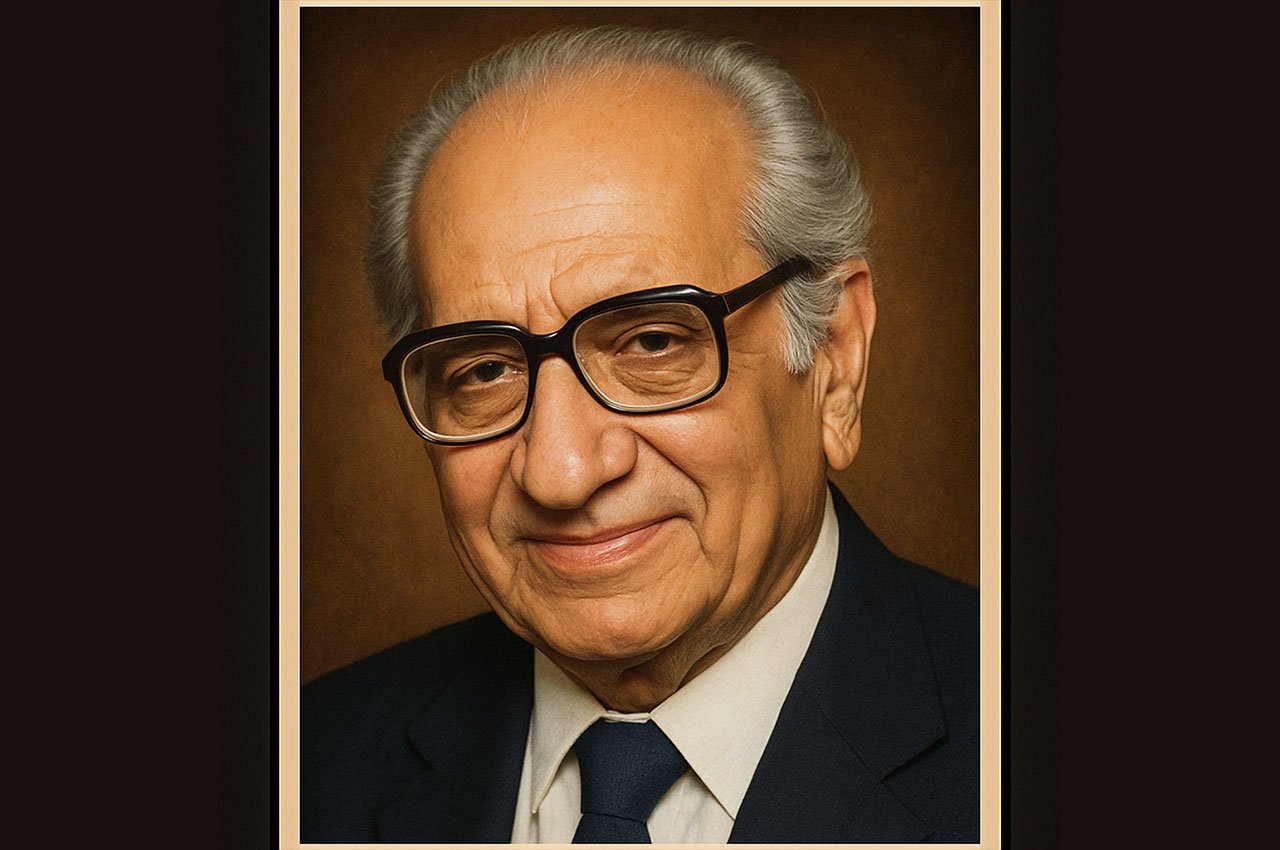
Once upon a time in Bombay, a man named Gopaldas Parmanand Sippy, better known as G P Sippy, was seen as just another face in the crowd of Bollywood’s second-rung producers. Not quite A-list, not quite influential, he had money to back films, but not the muscle to back hits. Industry insiders had begun labelling him with that dreaded tag: “B-grade producer.”
It was a label that stuck. The kind that quietly shuts doors, makes stars hesitant and stories smaller. G P Sippy was producing films, yes, but none had truly shaken the box office. Even when he backed projects like ‘Andaz’ or ‘Seeta Aur Geeta’, much of the credit bypassed him. For the industry, he was still the builder-turned-producer who funded films that were watchable, but rarely unforgettable.
Then came one wild idea. One bold move. One film that would change everything.
From Partition’s Ruins to Bombay Dreams
Long before Sholay, Sippy’s story began in Karachi, where he was born into a wealthy Sindhi family. The Partition of 1947 turned that life upside down. His family fled to Bombay, leaving behind property, business and stability. They arrived homeless, with no connections and little hope.
G P Sippy started small, selling carpets, running a roadside eatery and later entering construction. He built and sold apartments, slowly regaining financial ground. One of his early projects was for the actress Nargis. That brush with cinema was enough to spark curiosity. Soon, curiosity became passion, and passion became purpose.
Trying His Luck, Facing the Tag
In 1951, he produced ‘Sazaa’, and over the next decade, several more films followed. Some were appreciated, some flopped, but none truly turned heads. By the 60s, despite years in the business, he was still seen as a man producing films that were too safe, too average.
The “B-grade” tag began to haunt him. He was no Raj Kapoor, no B R Chopra, no Nasir Hussain. He was funding films but never leading cinematic conversations. Bollywood likes categories, and Sippy had been boxed into the one he hated most.
But he was far from finished.
Enter Ramesh Sippy, Exit Mediocrity
Tired of mediocrity and desperate to shake off the label, G P Sippy made a bold move. He called his son, Ramesh Sippy, back from the London School of Economics and handed him the director’s chair.
The results were promising. Together they delivered hits like ‘Seeta Aur Geeta’. The industry noticed, but still hesitated. Then came the project that would silence every critic.
Sholay: The Ultimate Gamble
In 1975, G P Sippy greenlit the most ambitious project of his life: ‘Sholay’. With a mammoth budget, a multi-star cast including Amitabh Bachchan, Dharmendra, Hema Malini and Sanjeev Kumar, and the dynamic writing duo Salim-Javed, ‘Sholay’ was a massive risk.
The film had it all: action, drama, comedy, tragedy, scale, vision. It was shot in 70mm, with stereophonic sound and expansive outdoor sets. It was unlike anything Indian audiences had seen.
Initially, critics were lukewarm. But then, something clicked. Word-of-mouth spread, dialogues became iconic, and audiences returned again and again.
‘Sholay’ became the highest-grossing film in Indian history at the time. It ran for five years straight in Mumbai’s Minerva Theatre. The film was no longer just a hit, it was history.
No Longer B-Grade, Now Box Office Royalty
With ‘Sholay’, G P Sippy shed the “B-grade” label once and for all. The same industry that once dismissed him now hailed him as the man who changed Indian cinema. He followed ‘Sholay’ with big-budget films like ‘Shaan’, ‘Satte Pe Satta’ and ‘Saagar’, reinforcing his reputation as a visionary producer.
He became a respected figure in the industry, even heading the Film Federation of India and the Film Producers Guild. No one questioned his place anymore. The man who once struggled to be taken seriously was now Bollywood royalty.
The Final Credits
G P Sippy passed away in 2007 at the age of 93. His legacy lives on through the films he produced, the risks he took and the barriers he broke. His journey from Partition refugee to real estate entrepreneur, from B-grade producer to the man behind India’s most loved film, is a story of resilience, reinvention and unshakable belief.
For more entertainment stories click here
Follow us for latest updates: