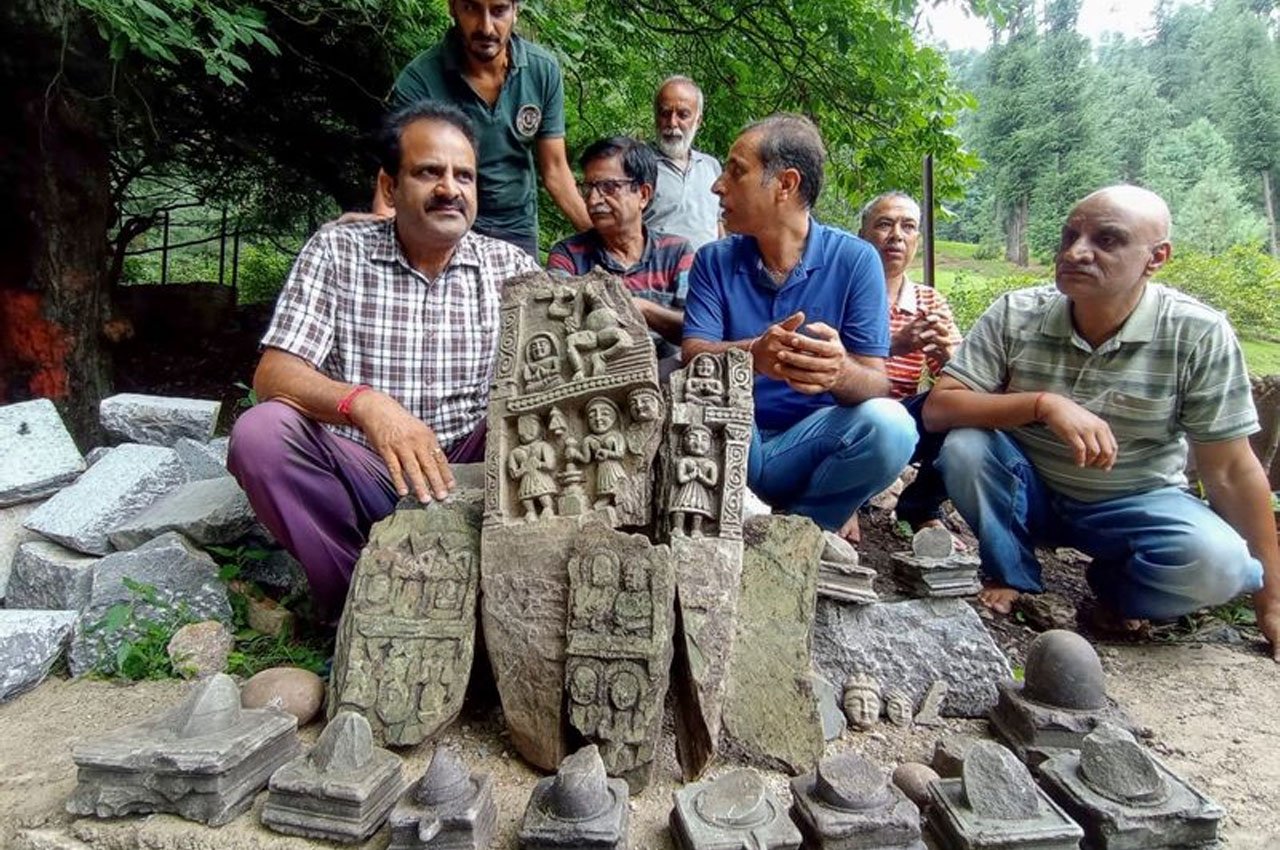
During renovation work at a spring site in Jammu & Kashmir’s Anantnag district, labourers uncovered ancient Hindu idols and Shivlings. According to The Tribune, the discovery took place at Karkoot Nag, a sacred pond located in the Salia area of Aishmuqam, around 16 km from Anantnag town.
Officials said the site has strong historical links to the Karkoota dynasty, which ruled Kashmir between 625 and 855 CE. Locals believe a temple once existed at the spot or the idols were carefully preserved there.
Significance and Initial Observations
Around 15 idols were found, including 11 Shivlings and a damaged sculpture believed to be from a temple pillar. Many carvings depict Hindu deities and mythological scenes. Experts suggest the artefacts may be over 1,400 years old, potentially dating back to the early medieval period. However, precise dating will require scientific analysis.
Next Steps: Preservation and Study
Officials from the Jammu & Kashmir Department of Archives, Archaeology and Museums visited the site. The idols will be transferred to the Shri Pratap Singh Museum in Srinagar, where they will be examined, dated, and preserved. Scholars will also study the iconography and materials used.
Community Response and Revival Appeal
Local Kashmiri Pandits have called for protection and preservation of the artefacts. A community member remarked, “There has been an influence of the Karkoota dynasty in this area, so there is a possibility a temple once existed here or the idols were safeguarded intentionally.” Many have appealed for a temple to be rebuilt at the site to honour the sacred relics and revive its historical importance.
Karkoot Nag has long been revered as a pilgrimage centre, adding to the spiritual and cultural significance of the find.
Historical Context
The Anantnag region has yielded several important archaeological finds linked to ancient Kashmir’s past. The Martand Sun Temple, built in the 8th century CE, and the Avantiswami Temple complex in Avantipur are nearby landmarks. These sites reveal the prominence of Hindu art, temple architecture, and royal patronage during the Karkoota and Utpala dynasties.
Earlier excavations at Semthan in Anantnag uncovered layers of occupation dating from Neolithic to Kushan, Indo-Greek, and Hindu periods, highlighting the area’s long-standing cultural and religious legacy.
Photo Credit: India Today
For more regional stories click here
Follow us for latest updates: