Photo Credit: Getty Images
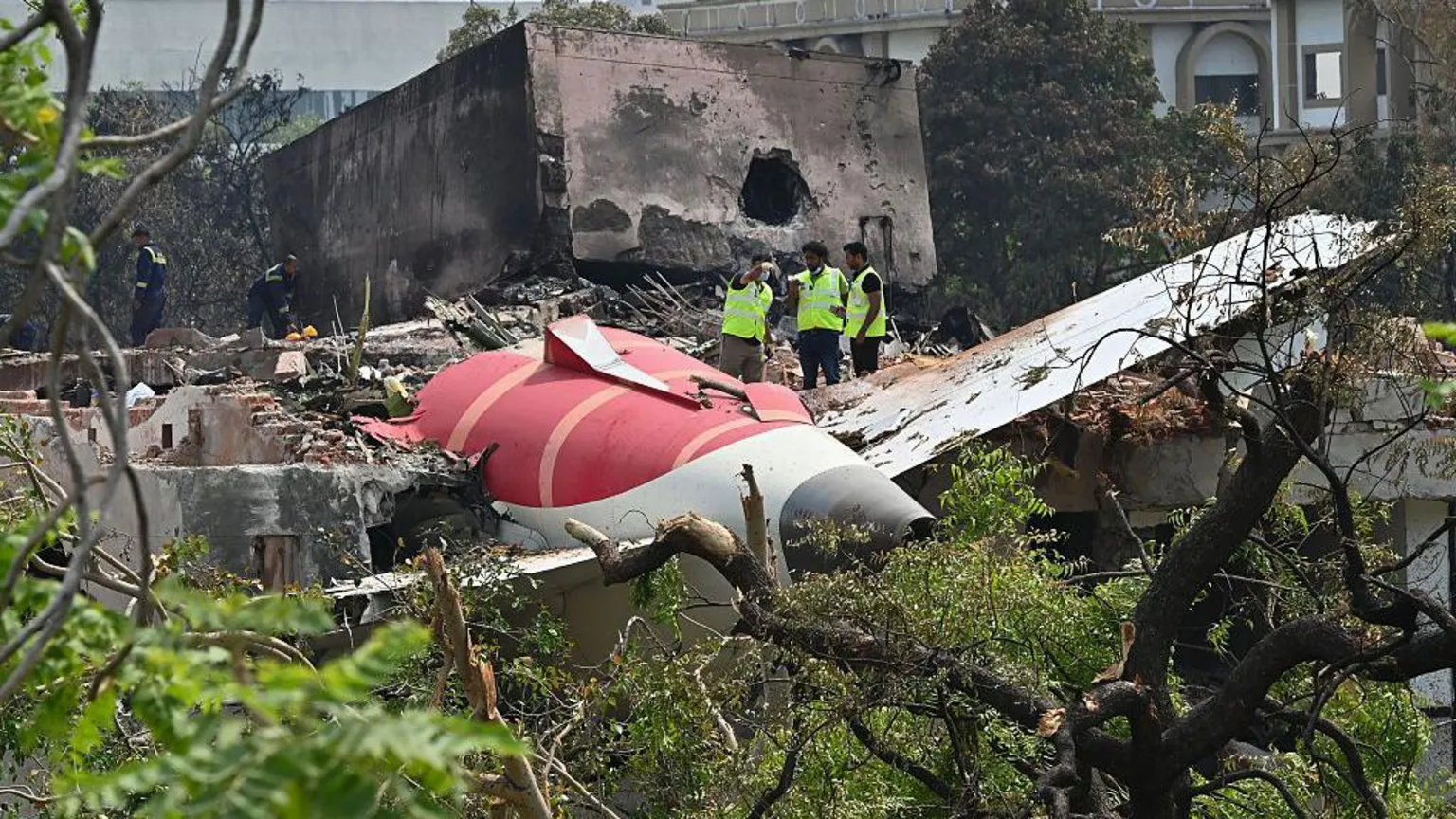
The recent crash of Air India Flight 171 near Ahmedabad has shaken public confidence in Indian aviation. As authorities sift through debris and trauma, the spotlight is now firmly on two critical devices: the flight data recorder (FDR) and cockpit voice recorder (CVR), commonly known as black boxes. These instruments don’t just store flight logs and cockpit conversations – they store answers. And the pressing question now is: should India decode them at home or send them abroad?
The black box debate isn’t merely technical. It’s symbolic. It reflects how much a country trusts its own investigative institutions – and how much the public can trust the final report.
The Case for Decoding Black Boxes in India
India inaugurated a ₹9 crore Aircraft Accident Investigation Bureau (AAIB) laboratory in Delhi with the promise that it would allow the country to conduct thorough, independent investigations. Now, when the first major test has arrived, reports suggest that authorities are considering sending the black boxes to the United States for decoding.
If this happens, it would be a missed opportunity – both for the lab and for public confidence. India has invested heavily in aviation infrastructure and aspires to be among the world’s leading aviation markets. But infrastructure without trust is hollow. If the AAIB lab is unable to decode the data from the black boxes, the government must publicly explain the technical limitations, the nature of the damage, and the rationale behind outsourcing the work.
Transparency is not just desirable – it is essential.
Aviation Accountability Demands Clarity
Aviation disasters require clarity at all levels: mechanical, procedural, human, and institutional. And black box data is the cornerstone of that clarity. Who was in control? Were there last-minute alerts? Did crew fatigue or technical malfunction play a role?
The answer to all these lies in the FDR and CVR. Where and how that data is decoded will either strengthen or weaken India’s ability to project itself as a self-reliant and responsible aviation nation.
At a time when the Directorate General of Civil Aviation (DGCA) is already under scrutiny for recent crew rostering violations and emergency equipment checks being bypassed by major carriers, the decision to outsource such a crucial part of the investigation would further compound public scepticism.
International Examples Reinforce Domestic Responsibility
Around the world, aviation leaders such as the United States, United Kingdom, France, and even Indonesia have developed indigenous capacity to handle accident probes. In 2014, when Indonesia faced the crash of AirAsia Flight 8501, it did seek technical support but maintained investigative control throughout. That balance is key.
Even when Malaysia Airlines Flight MH370 vanished, Malaysia ensured that its investigative team had ownership of the black box data – even when working with international experts. India should learn from these precedents.
A Middle Path, With India in Command
If the black boxes are severely damaged and beyond the current technical capacity of the AAIB lab, the solution is not secrecy – it’s clarity. India must send its own senior investigators with the recorders, oversee the decoding process, and release a detailed technical note explaining why the task couldn’t be done domestically. That would preserve both credibility and control.
In fact, this could be an opportunity to strengthen the lab’s capacity further. Partnering with institutions like the US NTSB or the UK AAIB on a case-by-case basis is not an admission of failure – it’s a mark of professional maturity. But relinquishing control without explanation is not acceptable.
The Bigger Picture
India’s aviation sector is expanding rapidly. With new routes, increased passenger traffic, and rising international presence, it must match safety with scale. That means investing not just in aircraft and airports, but in credible, transparent, and fully accountable aviation investigation processes.
Every aviation accident is a tragedy. But how a nation responds to it defines whether the tragedy becomes a turning point for reform or a missed opportunity buried under bureaucracy.
As the black boxes from the Air India crash await decoding, India faces a choice: lead with clarity or retreat behind closed doors. The right choice will determine how the world views Indian skies – for years to come.